Category: General

A history lesson

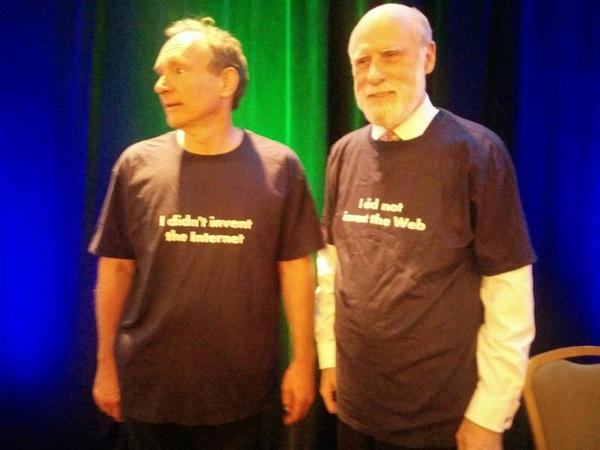
Tim Berners-Lee and Vint Cerf

This has been circulating on Twitter, courtesy of Jeremy Geelan - taken at W3C20.
(For those not in the know, Tim Berners-Lee is on the left, Vint Cerf on the right, and the joke is on those who don't know the difference between the web and the 'net.) Lovely.

If only gay sex caused global warming...

I've often quoted the statistic that, on 11 Sept 2001, about 3,000 people died in terrorist attacks, and, on the same day, about ten times that many died of starvation. Our brains find it hard to respond appropriately to such data.

There's a very nice LA Times article by Daniel Gilbert, a Harvard psychology professor, talking about the same issue with respect to climate change. It was published... ahem... 8 years ago, but was just brought to my attention by Ian Yorston.

Extract:

That's why we worry more about anthrax (with an annual death toll of roughly zero) than influenza (with an annual death toll of a quarter-million to a half-million people). Influenza is a natural accident, anthrax is an intentional action, and the smallest action captures our attention in a way that the largest accident doesn't. If two airplanes had been hit by lightning and crashed into a New York skyscraper, few of us would be able to name the date on which it happened.

Global warming isn't trying to kill us, and that's a shame. If climate change had been visited on us by a brutal dictator or an evil empire, the war on warming would be this nation's top priority.

An enjoyable read.

Why Privacy Matters

By nature, I'm somebody who probably errs on the side of openness rather than paranoia when it comes to privacy. I'm also very aware of how fortunate I am, though, to live in a country and under a government and legal system where I can afford to take this view.

Glenn Greenwald's excellent TED talk gives some other reasons for caring about privacy.

[ted id=2106]

Direct link

There is, though, I think, a balance to be struck here; it's also worth mentioning that complete privacy and anonymity doesn't always bring out the best in human nature. There's a reason why people wear hoodies, and there's a reason why newsgroups that allow anonymous posting are often filled with trolls (at best), and vicious bullies (at worst). It is important that many of our activities are subject to some peer review, at least, if not legal or governmental review. Also, investigative journalists, of course, tend to assume that they and their commercial backers are somehow entitled to monitor people's private activities, where other commercial interests or democratically-elected governments are not. Overall, though, I think he's on the right track.

He also hints at something I hadn't previously considered: that my religious upbringing might make me more accepting of constant invisible surveillance than I might otherwise be! Now, getting some real statistics on that would be an interesting sociological study...

Crystal showers from Matki

Update: I've had a phone call from one of the directors of Matki - see the end of the post.

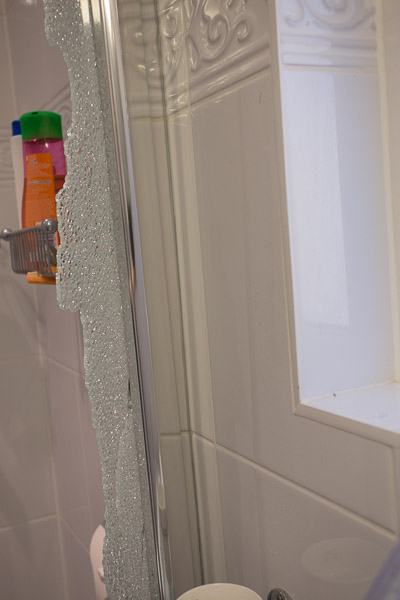
In the small hours of yesterday morning, one of the curved panels of our expensive and otherwise perfectly-adequate Matki shower enclosure exploded.
20141009-06430607-600

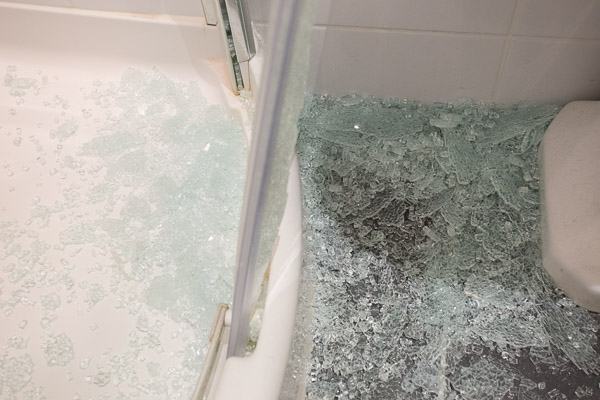
Most of the glass ended up on the floor; in fact, I first knew something was amiss when I couldn't open the bathroom door because of the glass fragments jammed underneath it. My first thought was 'Who broke a windscreen in my bathroom?'
20141009-06433909-600

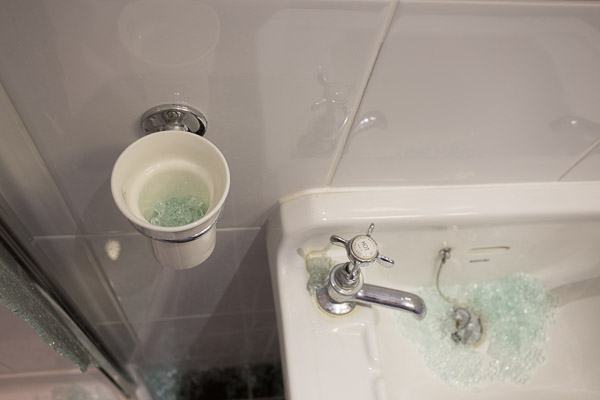
But I use the word 'exploded' advisedly, because it clearly didn't just collapse. Some of the glass was flung further afield.
20141009-07033215-600

There were even some pieces in the toilet pan, which has no direct line-of-sight from the original panel, so I guess they must have been thrown against the opposite wall with sufficient force to have bounced off and back across the (admittedly small) room into the loo.

All of which makes me wonder what this would have been like had anyone been in the room, or in the shower, at the time.

The shower was installed just under a year ago by a careful and seasoned professional, according to the included instructions, and has had nothing but normal use since then. So I called Matki, assuming that it would be replaced immediately under guarantee with profound apologies and that they'd send someone round to sort it out promptly. After all, they might have had a rather nasty law suit on their hands if someone had been blinded by flying glass.

However, I forgot two things - firstly that we're in Britain, where such gestures are not common, but secondly, I suppose, that any such action might be taken as an admission of culpability. Is the law enough of an ass that a gesture to make an otherwise disappointed customer into a happy customer is likely to backfire? Anyway, this customer stayed disappointed, though they did give me a modest discount on the replacement panel.

I get to spend a couple of hours in my pyjamas clearing up glass. I get to pay my plumber to fit the new unit. I get to pay Matki 140 quid for the new panel. I get a shower I can't use for two weeks. Ah, well. Matki, in exchange, get this blog post. :-)

Update, Mon 13th Oct

I thought it only fair to inform Matki of this post, and give them the chance to respond. This morning I received a call from one of the directors, Des Rocks, who struck me as a very fine and very rational fellow. He was most apologetic, and we had a good discussion about both glass manufacture and social media!

I mentioned to him that the customer service person I had spoken to seemed polite, efficient and businesslike, but that his hands had clearly been tied by the company's policy. I was informed that they were changing some of their policies now to allow a little more flexibility. They're also sending someone to fit a replacement panel, and will not be charging me for it.

All of which means that I'm now once again a happy Matki customer, and remain impressed with the company and its products. It's sad that I had to resort to a blog post to get to this point, but I'm willing to give them the benefit of the doubt and assume that these events are very rare, and that getting them fixed is less likely to be a problem for customers in the future. All's well that ends well.

100% proof in the supermarket

I remember, a few years ago, seeing some Aberdeen Angus beefburgers in my local supermarket labelled as "Not less than 100% beef!". I turned them over to look at the list of ingredients. Yes, there was a list. You'd think they might not need a list for something that was really 100% beef.

This week, I spotted a bottle of shampoo.

2014-09-29 09.32.26

Just what do people think they mean by 'up to 100%'? Are they trying to reassure us that it isn't more than 100% effective?

Readers will know that posts on Status-Q are up to 100% accurate and insightful, and, my friends, I think we should be bothered by such things. At first I was concerned that advertising executives have so little grasp of numbers. But not all advertisers are stupid, which led me to the far more worrying conclusion that this kind of thing must work on the populace as a whole. Scary.

Now, the more observant of you will have spotted the little asterisk on the bottle, indicating a footnote. So I turned this item over, too, and found it.

* visible flakes from a distance of 2 feet, with regular use

I guess this is their abbreviated way of saying, "we consider an absence of visible flakes at a distance of 2 feet to be 100% effective treatment, and we offer something between this, and no effect at all". Presumably, also, the treatment appears more effective the further away you get?

Ah well, at least I don't generally suffer from dandruff, which is perhaps why I've been rated, by up to 100% of those asked, as 'amongst the handsomest men in the world'*.

*when viewed in a crowd of handsome men, from distances greater than 2km.

Doing the TWiT

Almost exactly 15 years ago, a Californian TV channel sent me a webcam. To be precise, they sent me a 3COM camera which came with a PCI frame-capture card. Connecting this up was a bit of a palaver, because I ran Linux on my home machine at the time, and I had to create a new partition and install Windows 95 so that I could run the supplied software. But it was worth it, because this was ZDTV, who were doing an interesting experiment on their Call for Help programme: interviewing people in remote locations using these new-fangled webcams alongside a traditional telephone call.

By the time my segment came, it was well past midnight, and I got a laugh by holding up a clock to prove that I was somewhere in a very different timezone, and by saying that, though they thought they were very advanced in California, they were still in Tuesday, while some of us had already moved on to Wednesday some time ago.

There were other guests on the show, and we made minor history by being the first time ZDTV (and perhaps anyone) had done a three-way call using webcams as part of a live broadcast. The presenter was a very nice chap named Leo Laporte.

Since I seldom saw any American TV, I wasn't aware at the time of Laporte's gradually increasing prominence as the host of shows such as The Screen Savers on the same channel (which had by then changed its name to TechTV). But he soon gained more international exposure with the launch in 2005 of the This Week In Tech podcast -- affectionately known as TWiT -- which grew into the TWiT.tv network, consisting of around 30 different shows. I have been listening to several of them almost since day one.

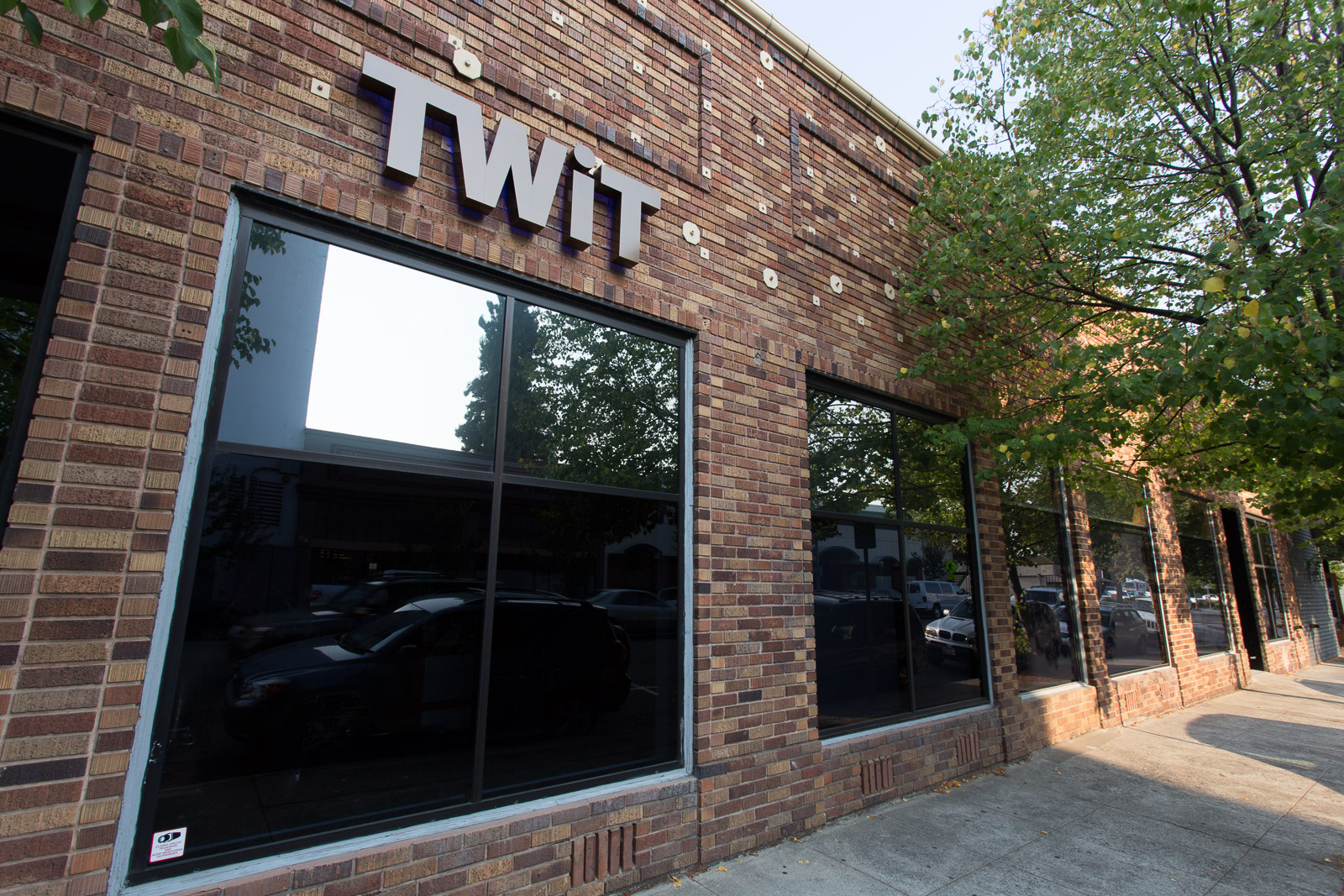
As the network grew, they built their own studio in Petaluma, California. And it just so happened that I was driving through there on Friday, so I stopped off to have a look.

20140920-001721104

I stuck my head inside the door and said hello, and the wonderful Debi Delchini immediately welcomed this stranger from across the seas and gave me a guided tour, despite the fact that I had arrived right at the end of her Friday afternoon.

20140919-23500592

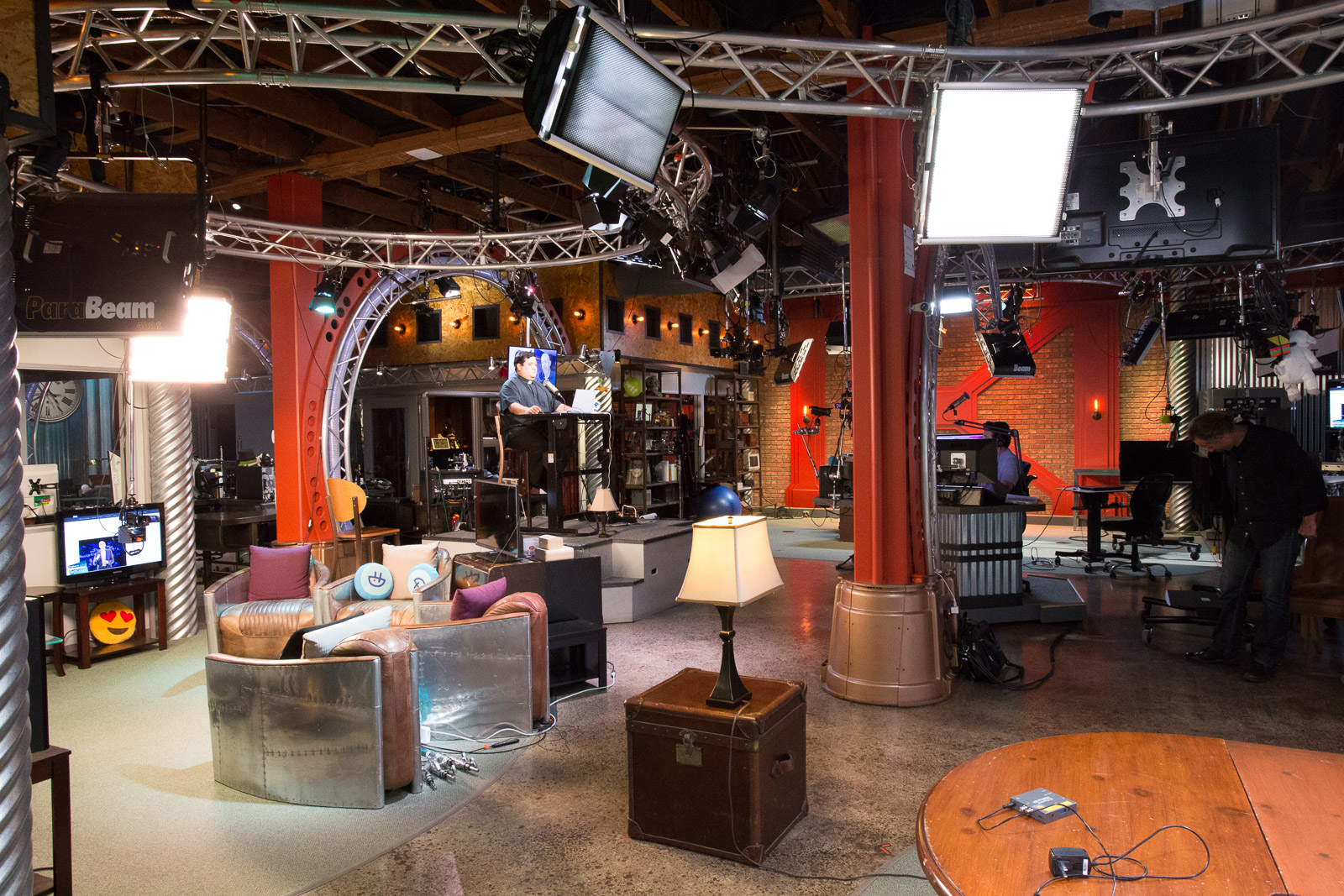
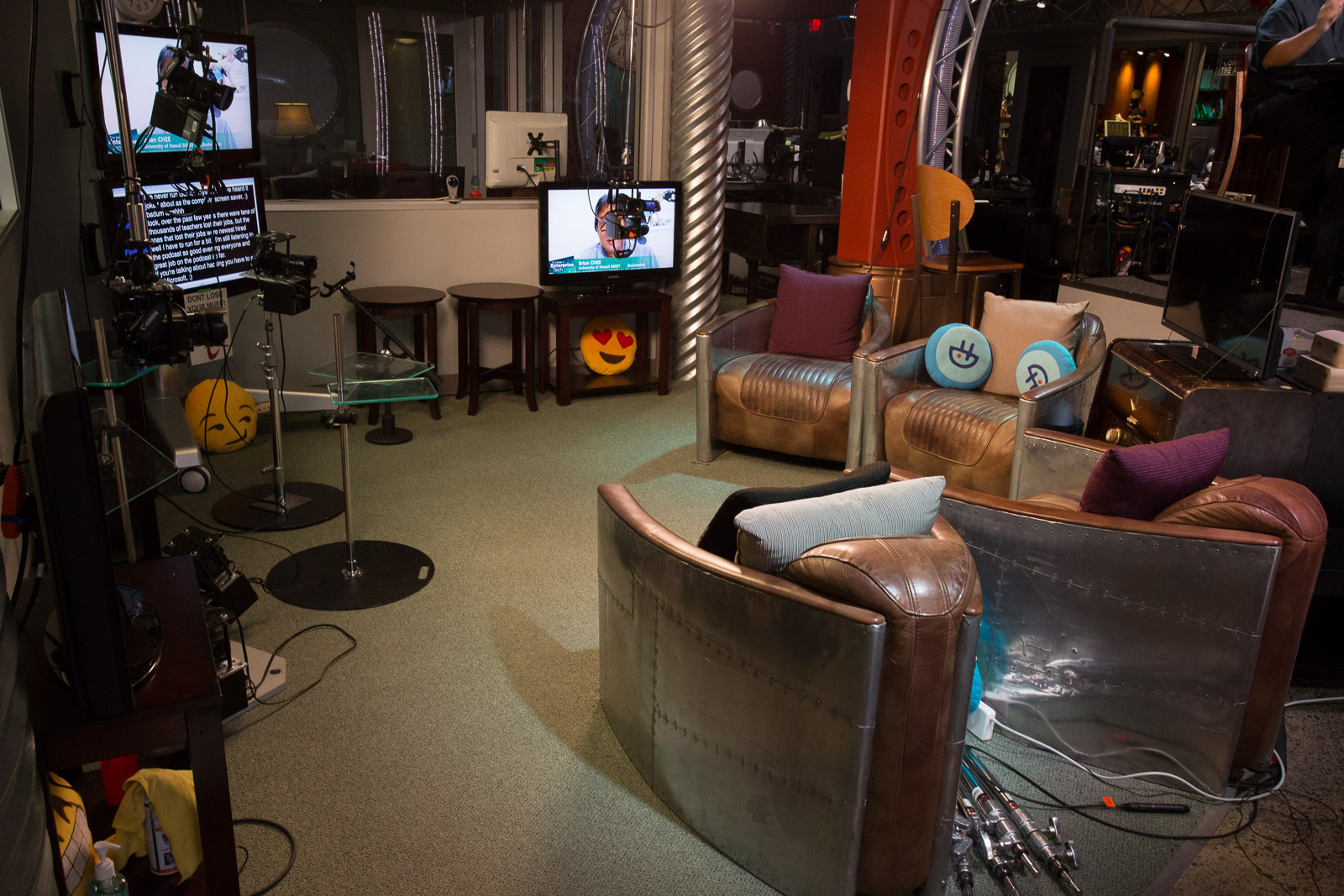
The TWiT studio, though not large, is cunningly divided into half a dozen different sets, to allow different moods for different shows.

20140920-001101102

The mixing desk in the middle can rotate to face whichever one is in use.

There are cameras everywhere. Unlike traditional studios where large cameras roll about on substantial bases, we are now in a world were adding extra small broadcast-quality cameras is cheap compared to arranging the building around a few bigger ones.

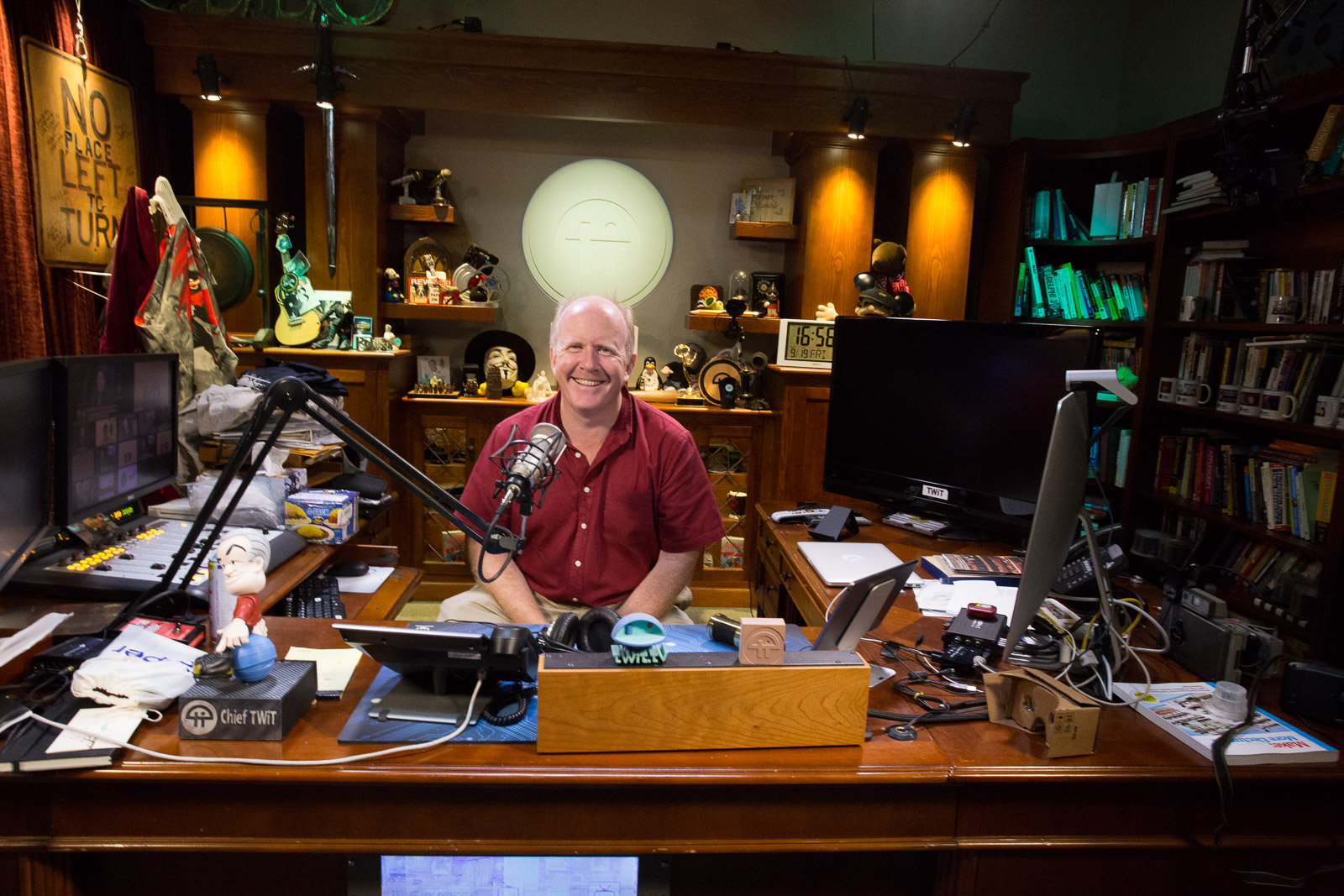
Leo wasn't there, sadly, but I did get to sit in his chair!

20140919-23555097

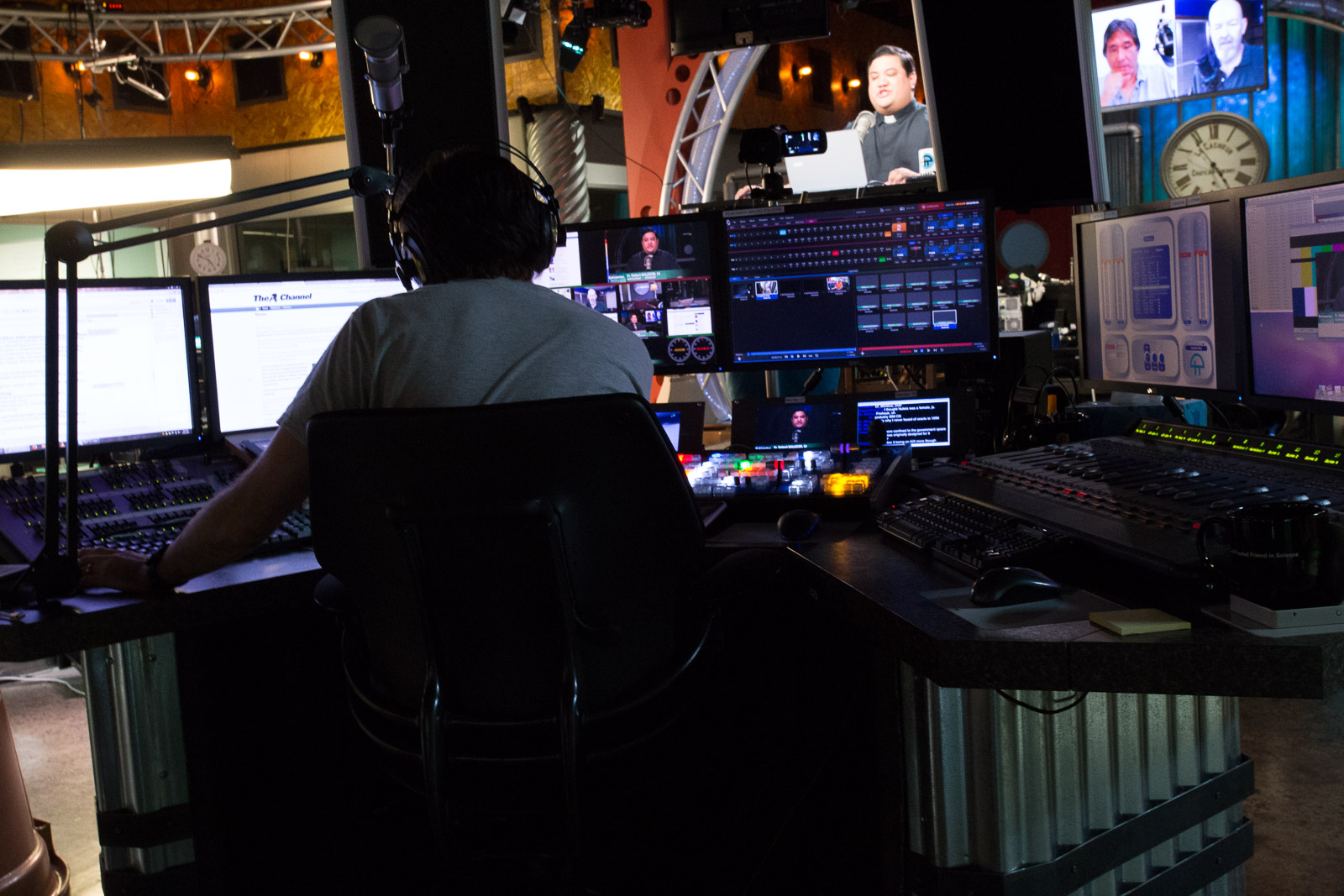
There was, however, a show being recorded: Fr Robert Ballecer's This Week in Enterprise Tech.

20140919-23520093

I noticed that he was interviewing two people over Skype.

That's good, I thought: it looks as if the format has caught on after all.

Improve the visibility through your windscreen...

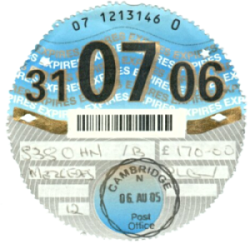
Road tax discOn 1st October, the tax disc that British cars need to display in their windows is being abolished, nearly a century after it was introduced. Not the tax, you understand, just the disc.

The various government web sites talking about this say that it's no longer needed 'because of the electronic register'. They don't tend to mention the CCTV cameras which now check your number plate much more reliably than the traffic wardens who used to check your tax discs.

This all makes good sense - it should help dramatically reduce the number of uninsured drivers on the road, for example - but it will no doubt also feed the fears of the conspiracy theorists...