Canadian Coffee
Another radio interview about the good ol' coffee pot - this time with CBC.
You can find it here.
It was done over Skype, and is heavily edited, but it mostly makes sense! Just about 4 mins long.
Quentin Stafford-Fraser's blog
One should always have something sensational to read on the net...
Another radio interview about the good ol' coffee pot - this time with CBC.
You can find it here.
It was done over Skype, and is heavily edited, but it mostly makes sense! Just about 4 mins long.
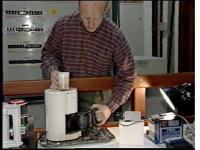 Tucked away on a backup disk yesterday, I discovered a few thousand of my emails from the 1990s. And in the folder from late Feb 1992, I found something I thought was lost forever. Bob Metcalfe was visiting Cambridge, on sabbatical to the University Computer Lab, just as we were setting up the Trojan Room Coffee Pot camera. He wrote about it in his column in Communications Week, a publication which, sadly, closed down not long afterwards (roughly at the time when the camera was connected to the web and became quite famous). This original article was therefore, unknowingly, the first published reference to what was to become the world's first webcam.
But I didn't have a copy, and nor did Bob - the old Mac floppy on which he saved it would have been hard to read now even if he could have found it - and if anyone kept an archive of CommWeek articles, I haven't found it on the web. (Few people in 1992 would have heard of the World Wide Web, even those reading this kind of technical article.) But, as it went to press, Bob sent me a copy by email, and, sure enough, just over 20 years later, there it was, easily readable by my Apple Mail program.
There's probably some useful lesson there about the longevity of different data formats... Anyway, while it may have little interest to anyone not closely involved with networking technologies at the time, I'm still very glad that, with Bob's kind permission, I can now make the article available here. And I must take more care of my email archives in future...
An interesting start to the day today.
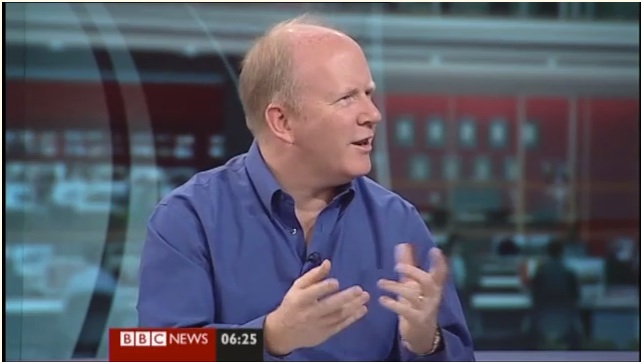
At an hour at which all civilised people should still be tucked up in bed, I presented myself at the dear old BBC Television Centre to be interviewed on the Breakfast TV programme. I was then whisked upstairs to do the same on Radio 5 Live before coming back downstairs again to do a slight variation on the theme on TV again.
And the reason for all this early-morning scurrying through the rather charming maze that is the BBC?
Well, it's about 20 years since the start of the World Wide Web. (Do you remember when we used to call it by its full name to distinguish it from the more common arachnean use?) So they've been running various anniversary features and interviews, and the old webcam story is always a good light-hearted one when most of the rest of the day's news is about economic collapse!
It's hard to pin an exact date on the start of the web, but it's usually taken to be Aug 6, 1991, when Tim Berners-Lee posted a message on a usenet newsgroup describing the project and telling people where to get the code if they wanted to try it out. Hence the 20th-birthday celebrations today. It seems amazing to me that undergraduates leaving college next year will have been born after the web, and will never have known a world without it.
One of the first things I remember doing with the web, probably some time in 1992, was writing a web server which was effectively a blogging tool, though it would be a long time before anyone would have called it that. It showed a page and let you type something at the bottom; that 'something' would then be appended to the page with a timestamp. I used it for a little while as a lab notebook, but not very seriously or for very long. I was really just experimenting with the idea of web pages that could alter themselves... And of pages that could be edited through the browser itself.
Status-Q came much later: my first post here was not until early 2001, so it's a relative youngster. But it has at least, I realise, been going now for more than half of the life of the web.
Anyway, here are links to recordings of the radio and TV interviews in case anyone's interested.