Missing the boat
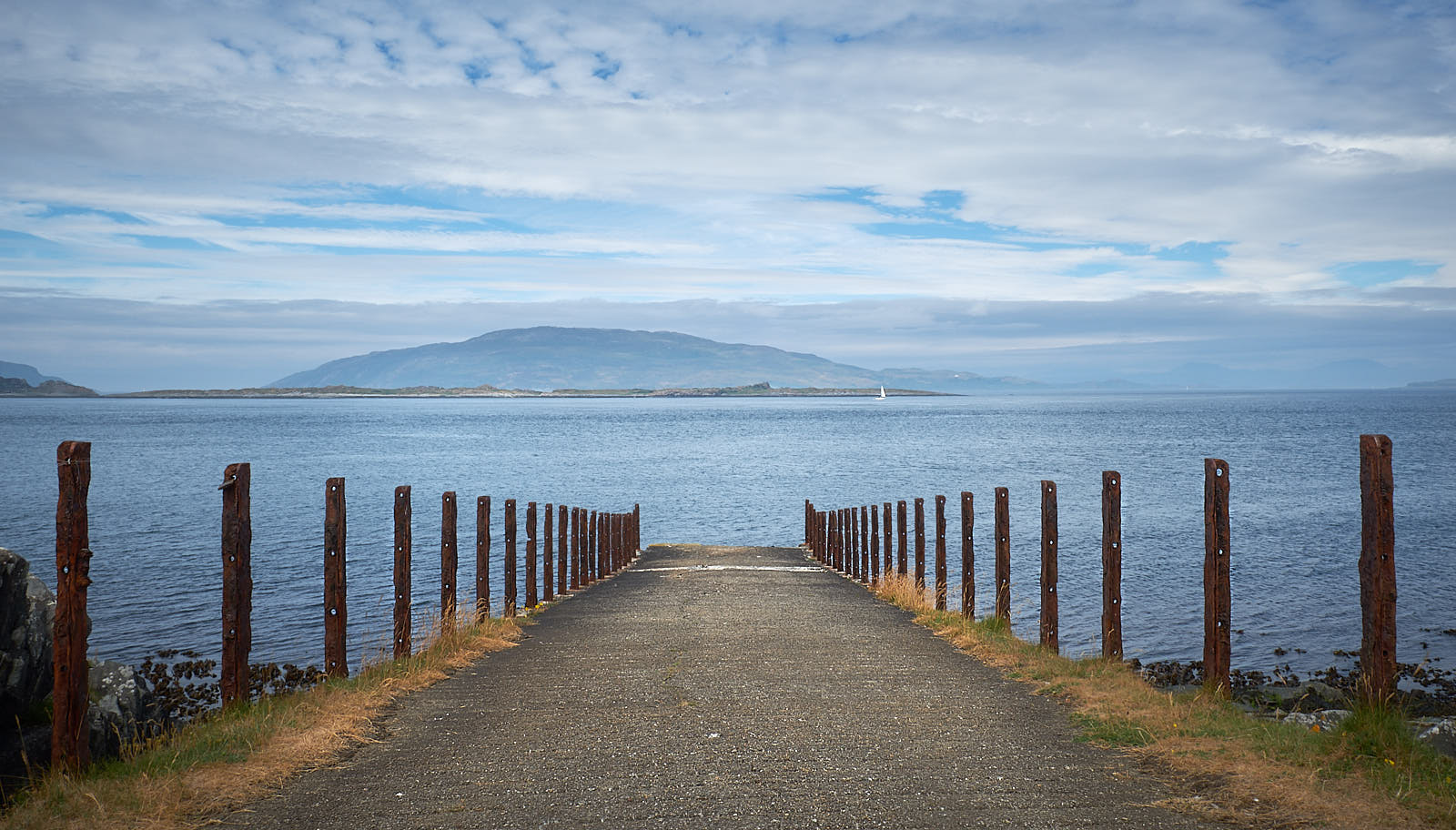
"The Ferry has Departed" -- Craignish, Scotland, in July
Quentin Stafford-Fraser's blog
One should always have something sensational to read on the net...
"The Ferry has Departed" -- Craignish, Scotland, in July
At a recent workshop, I was sitting next to a senior manager from a large multinational company, whose name I shall withhold to save her possible embarrassment. We were discussing the future of self-driving vehicles, and what services might be provided by autonomous units that came to you, rather than you having to go to them.
Well, we were deep into a highly 'facilitated' meeting, where our brainstorming was rather... structured..., and it may have been as an act of rebellion that, at some point, one of us came up with the idea of the self-driving toilet, something you could summon when desperate.
And then we got a bit giggly, and started planning the advertising campaign. We came up with phrases like, "Wees on Wheels!" and "When you need the loo, we come to you!", before order was re-established.
You may scoff. But you just wait. It'll happen, I tell you, and when it does, remember that you heard about it first on Status-Q...
There was a miraculous event at my brother Simon's house in Winchester this week, as the new plaster in their sitting room started to dry...
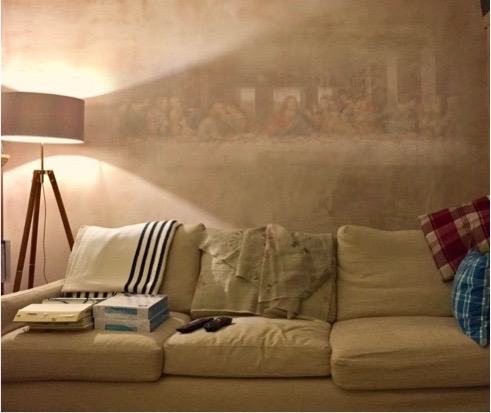
I told him not to paint over it, and he could then retire in comfort, as long as he didn't mind having a lot of visitors.
Actually, the miraculous event was that -- being, he freely admits, somewhat unfamiliar with Photoshop or anything similar -- he created this image in Powerpoint.
Anyway, I thought it was great.
If you go to a bus stop where the bus arrives, on average, every 10 minutes, how long will you wait?
5 minutes, on average, right?
Wrong.
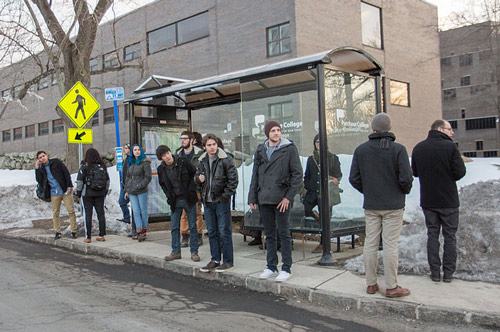
This is an example of The Inspection Paradox, a phenomenon of which I was dimly aware, but I came across some nice examples in my reading this morning - and it's an important thing to understand.
You see, 5 minutes would be the right answer if the bus came at exactly evenly-spaced 10 minute intervals. But this doesn't happen, at least, not outside Switzerland. So the gaps may be bigger or smaller.
If you arrive at a random time, you are more likely to hit one of the bigger gaps. The average waiting time that you, as a passenger, will experience, will therefore be higher. (Python programmers interested in a detailed analysis of this example could take a look at this blog post. If the arrival time follows a reasonably long-tailed Poisson distribution — admittedly unlikely in this particular example — then your average wait could actually be as high as 10 minutes.)
Allen Downey's blog has a range of other nice examples in here. You can read the whole thing if you want the details, but here are a few excerpts of the key points:
A common example is the apparent paradox of class sizes. Suppose you ask college students how big their classes are and average the responses. The result might be 56. But if you ask the school for the average class size, they might say 31. It sounds like someone is lying, but they could both be right.
Basically, if you sample students at random, you are often more likely to hit students in larger classes, and that will skew your statistics if you are trying to determine the actual average class size.
That's not necessarily a mistake. If you want to quantify student experience, the average across students might be a more meaningful statistic than the average across classes. But you have to be clear about what you are measuring and how you report it.
Here's another travel-related example:
The same effect applies to passenger planes. Airlines complain that they are losing money because so many flights are nearly empty. At the same time passengers complain that flying is miserable because planes are too full. They could both be right. When a flight is nearly empty, only a few passengers enjoy the extra space. But when a flight is full, many passengers feel the crunch.
The Inspection Paradox is relevant to social networks, too - real or virtual.
In 1991, Scott Feld presented the ""friendship paradox"": the observation that most people have fewer friends than their friends have.
If you think that everyone you know has a wider social circle than you do, it's because you are simply more likely to be in the social circles of people with bigger social circles.
That may or may not make you feel better, but at least you now have a name for it!
Photo: Frank Hank
Update, a few days later:
As I sit in a long phone queue waiting to talk to BT, my broadband provider, I ponder just how often, on such calls, I hear the phrase, "We are experiencing a large number of calls at the moment, and we apologise for the delay..." I have often thought, that, since they always seem to be experiencing an unusually large number of calls, perhaps they need to employ some more people.
But then I realise, of course, that I am one of those large numbers. It is natural that people will experience this more often than not, because more people will be calling during the periods when more people are calling...
This is definitely one of those 'just in case you're Googling for it' posts!
Regular readers will know that in the spring, we bought a campervan: a 3-year old Bilbo's Nexa based on a long-wheelbase VW T5, and we've had great fun with it so far. You can read more about it in an earlier post.
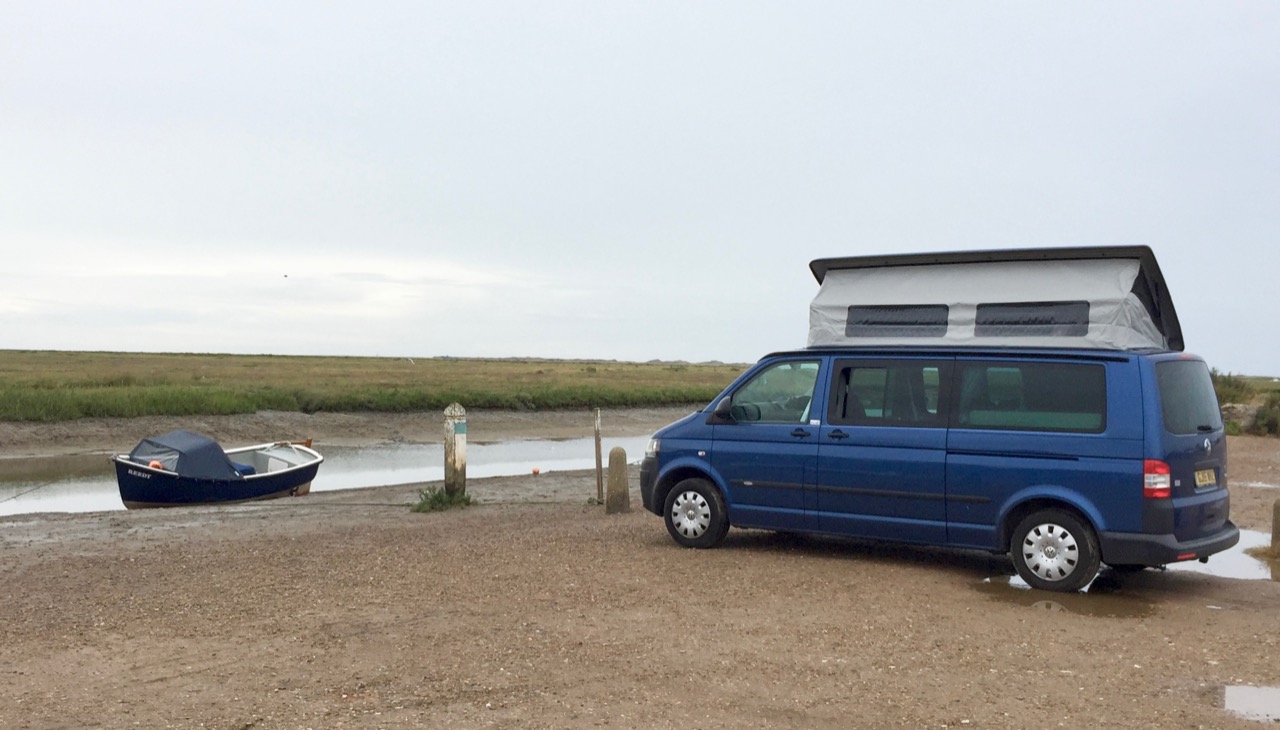
A common temptation amongst new van owners is to purchase far too many accessories immediately and then use only a fraction of them, a temptation that we, surprisingly for us, managed mostly to resist. But there are a few things we've been particularly pleased with, and some of them were chosen after extensive research, so I thought a list might be useful to others. They range from the only-useful-for-Bilbos-Nexa to the handy-for-any-campervan variety!
So, in no particular order...
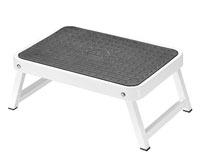 This makes climbing in and out of the van just that bit easier, especially if you're on sloping ground and your door is higher than usual because of levelling ramps. It doesn't provide a huge amount of height, but it also folds up nice and small.
We got ours from Amazon.
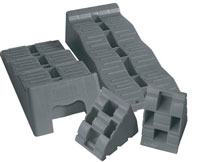 Perhaps the bulkiest thing that everyone needs to carry is a set of levelling ramps. We got the Fiamma ones, which work fine, but I imagine others are much the same. What I do recommend, though, is getting the chocks to go with them, or making yourself something similar, even though they're a bit fiddly.
Why? Well, on most VW vans, when you want to rotate the driver's seat to face backwards, you need to let off the handbrake. You can put the van in gear (or in 'park') before doing so, so you're not going to roll anywhere very far, but if you're up on ramps, you'll probably roll far enough to lose a noticeable chunk of your carefully-adjusted height! Chocks are the solution.
Using them is rather tricky, of course, if you're on your own, but, in that situation, you may not care so much about rotating the driver's seat anyway.
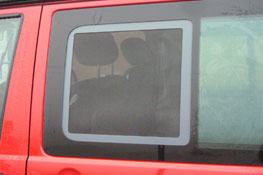 Visiting Scotland over the summer, we decided we would need some midge-free ventilation. Midges are pretty tiny, and some flyscreens won't keep them out.
We bought a pair of these from Jerba, who are based in Scotland, so we figured they should know what they were doing. And they did. Check with them for the precise details for your windows, though; you do want them to fit well!
For more general ventilation in hot weather, we also got some of these from Brandrup for the front windows. They're bulky, a bit inconvenient to carry, and slightly tricky to install. But they do have the advantage of providing ventilation while maintaining security - occasionally useful when leaving the dog in the van.
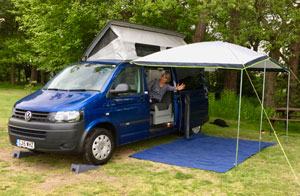 Whether or not you actually have an awning, when the ground gets wet, you'll probably want some sort of a doormat between you and the mud. When we rented a van before buying, it came with some of this permeable rubber mat, which really proved its worth after a few rainy nights, so we asked them what it was and where to get it.
The rain goes through it, rather than forming puddles; you can have a large area and still fold it up small; it's easy to hose down afterwards; and, apparently, some campsites only let you pitch things if you have a groundsheet that won't kill the grass in the process. This meets that criterion too.
There are lots of sources for similar stuff, but we were pleased with the sheet we got from eBay. It even matched the van!
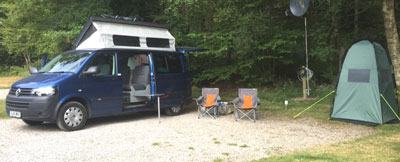
Our van does have a loo, but it's in a cupboard and you have to pull it out to use it. On the rare occasions when we've stayed at sites without WC facilities, we prefer to have a slightly less intimate arrangement!
You can buy cheaper loo tents than Khyam's one, but theirs is very well made and easy to put up, and I have no regrets about spending a bit more. We found that using our portable loo in it was a much more civilised experience than we'd expected.
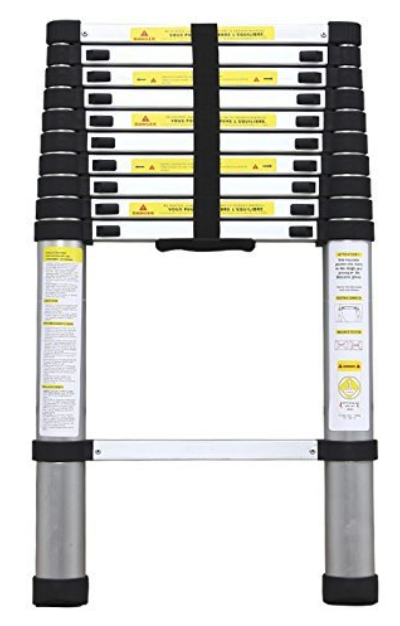 On our longer summer trip, we were carrying things like kayak paddles, awnings, chairs and loo tents, so we decided to use a roof rack and roof bag. One challenge when compared to car travel, though, is that our roof is two metres off the ground, and while was possible to reach it by, say, standing on the tyres, life became very much easier once we got one of these.
After we returned, we also found this was a lot easier to move around the house than any of our other ladders! A handy piece of kit.
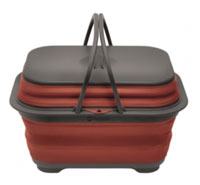 One thing that's changed since my childhood camping days is the availability of a huge range of collapsible implements made of silicon rubber. We have a collapsible kettle for using on the gas ring, for example (though at most sites we have electric hook-up and so use this rather sweet little electric kettle).
But my favourite is this combined bucket, washing-up bowl and draining board, which comes in a range of different colours, collapses to be almost flat, and does its job very nicely. Ours is a more subtle cream colour! One unexpected benefit of the silicon feet is that, when collapsed, it doesn't slip around, to the extent that we just leave it out on the worktop when driving. There's a helpful video about them here.
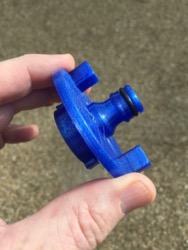 Here's a small, expensive piece of blue plastic. What is it and why would you want one? Or why, at least, would the owner of a Bilbo's campervan want one?
Well...
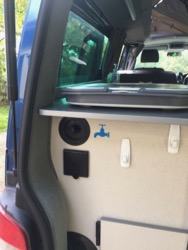 One slight eccentricity of Bilbo's campervans is that they have the fresh-water filling point on the inside. I've heard various explanations for this: it reduces the likelihood of accidentally putting diesel in your water tank, it reduces the chance of freezing in low temperatures, and so on, but I suspect it's chiefly down to a much simpler installation process.
It does mean, though, that filling up with water involves pointing a hose at the inside of your van, and if you're on your own, managing to keep this in the hole and avoid spillage while you go and turn the tap on or off can sometimes be a challenge.
This little widget, which I think the seller produces in small quantities using a 3D printer, lets you connect up the hose and then holds it in place, and keeps the water pointing in the right direction!
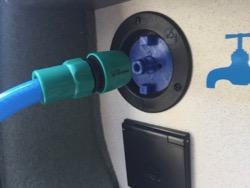 As an aside, my hose has a stop valve on one end of it, which only lets water through once something is connected. Very handy. I bought the hose ready-made, without noticing this, and it caused me some confusion until I worked out what was going on!
Since it's only on one end, it can also cause some surprises if you connect this end to the tap, thinking that the other end is blocked off...
 In a small van, it can be a challenge getting things dry, especially if, like us, you tend not to spend much time relaxing at the campsite, but instead are always on the move! So wet towels were a bit of a problem, until we discovered these.
They are really intended for dogs, but, having bought one for Tilly, I thought I'd just try it in the shower myself, before she got to use it. We immediately went and bought two more for ourselves.
These are not big fluffy luxurious things in which to wrap yourself. They are more like a kind of super-absorbent imitation chamois leather. You rub yourself down, wring it out, and repeat until you're dry enough. But they take almost no space in the van, and, best of all, they are meant to be put back in their sealed containers while still moist. So the whole problem of what to do with the wet towels goes away.
Update, a couple of months later: Oh yes, and these are absolutely fabulous for removing condensation from the inside of your windows, too!
 Tiny, cheap, well made, and it does the job nicely. Not much else to say!
Available from many places including Amazon.
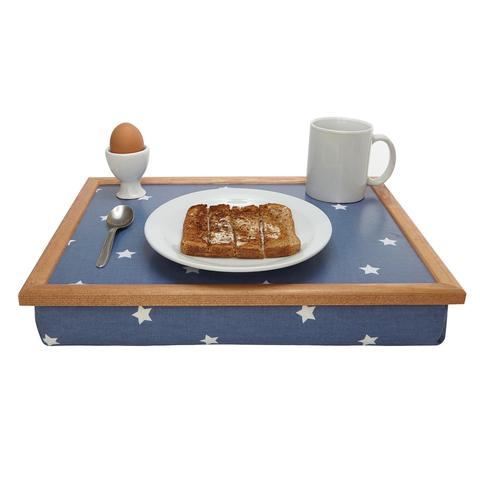 Now, I tend to think of lap trays as something for the old folks' home rather than for the campsite, but we got a couple of these ones from the delightfully-named gift shop 'Not Another Bunch of Flowers', and they've been excellent in the van.
We use them whenever we don't have the table up, when we're sitting outside, or when for some reason we just want a little bit more solid, flat space on which to put things.
I also like the fact that they don't have cats, flowers or Constable landscapes on them, which makes me feel a bit less old.
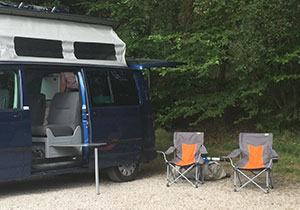 It's always nice to be able to sit outside, but chairs can be a nuisance to carry around, unless you have a VW California, which has handy storage for them in the tailgate.
We ended up going for Kampa Cocktail chairs, which are a bit lower than we might otherwise have chosen, but have the benefit of being really quite compact when folded.
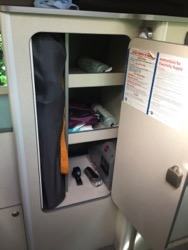 Bilbo's Nexa owners, in particular, might like to know that we bought them after considerable research to find something that would fit into the Nexa's wardrobe, without simultaneously being so small as to have you sitting on the floor!
They are fairly low, though - we really need to find a small low table to go beside them for the G&T.
 Lastly -- for now, at least -- we needed some pots and pans, and we've been very pleased with this little set.
The handles unscrew, and it all stacks together in a very small space, whilst feeling reassuringly solid once assembled.
So there you are - those are some of our favourites after the first six months or so. Hope they're useful to somebody out there!
One of the key reasons people want self-driving vehicles is to make their daily commute less tedious. But the possibilities go much further than simply allowing you to take your hands off the steering wheel so you can text your friends on the way to work.
At a conference in Bavaria recently, I asked the question, ""Where would you most like to spend the time between getting up in the morning and arriving at the office?"" For me, that place would need to have a charger for my laptop, a table, comfortable chairs, and a really good coffee machine, ideally filled with my choice of coffee beans. My coffee mug would be in the cupboard, and there would be fresh milk in the fridge.
Yes, I basically want a self-driving cafe.
The closest image I could find online was this; the front of a large and luxurious motorhome:
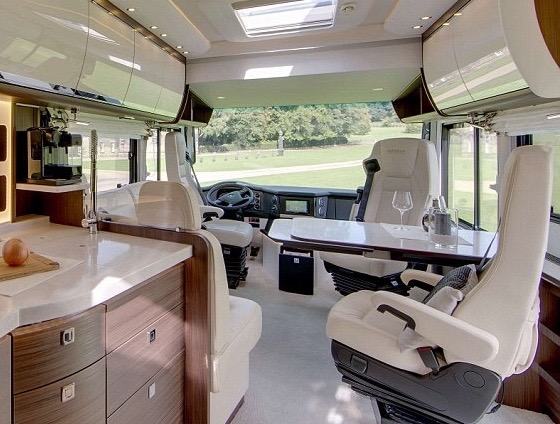
Now, I might not need something this large and luxurious just for my own personal commute, but you get the idea: this is nothing like my current car; it's more like a room of my house that just happens to move around.
People often predict that autonomous vehicles will mean the end of car ownership; if you're just a passenger in the vehicle, why not treat it like a taxi, and summon it when you need it? No doubt that will happen in some situations, if your main use for a car is the occasional trip to a restaurant, or the shopping mall, or the airport. But for a daily commute, very few people choose a taxi at present, and I think that's unlikely to change much if the driver happens to be silicon-based instead of carbon-based.
But if we ever get something like the self-driving breakfast bar I describe above, it will, I think, be an even more personal space than the cars of today: it'll grind my coffee beans, play my music, have the right adapter for my laptop. It may even have my choice of curtains at the windows. It will be more tailored to the various needs I have while using it, than is a traditional car, which is tailored primarily to the single task of guiding it down the road.
In short, so many more personal preferences may be involved in choosing and using such a vehicle that I think""Š—""Šfor the purpose of commuting, at least""Š—""Šrumours of the death of car ownership may have been somewhat exaggerated.
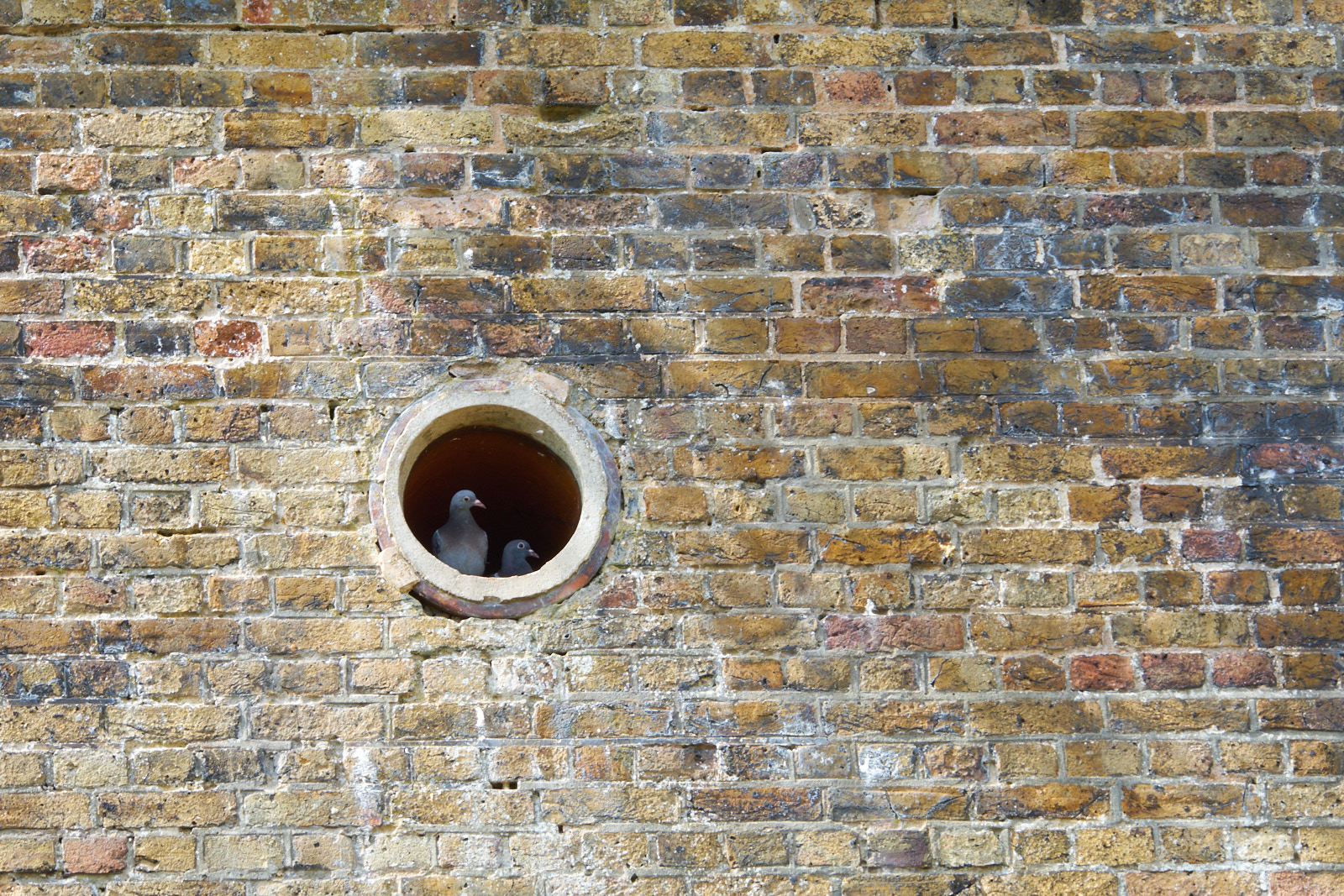
At the Drop Redoubt fortifications on Dover Western Heights

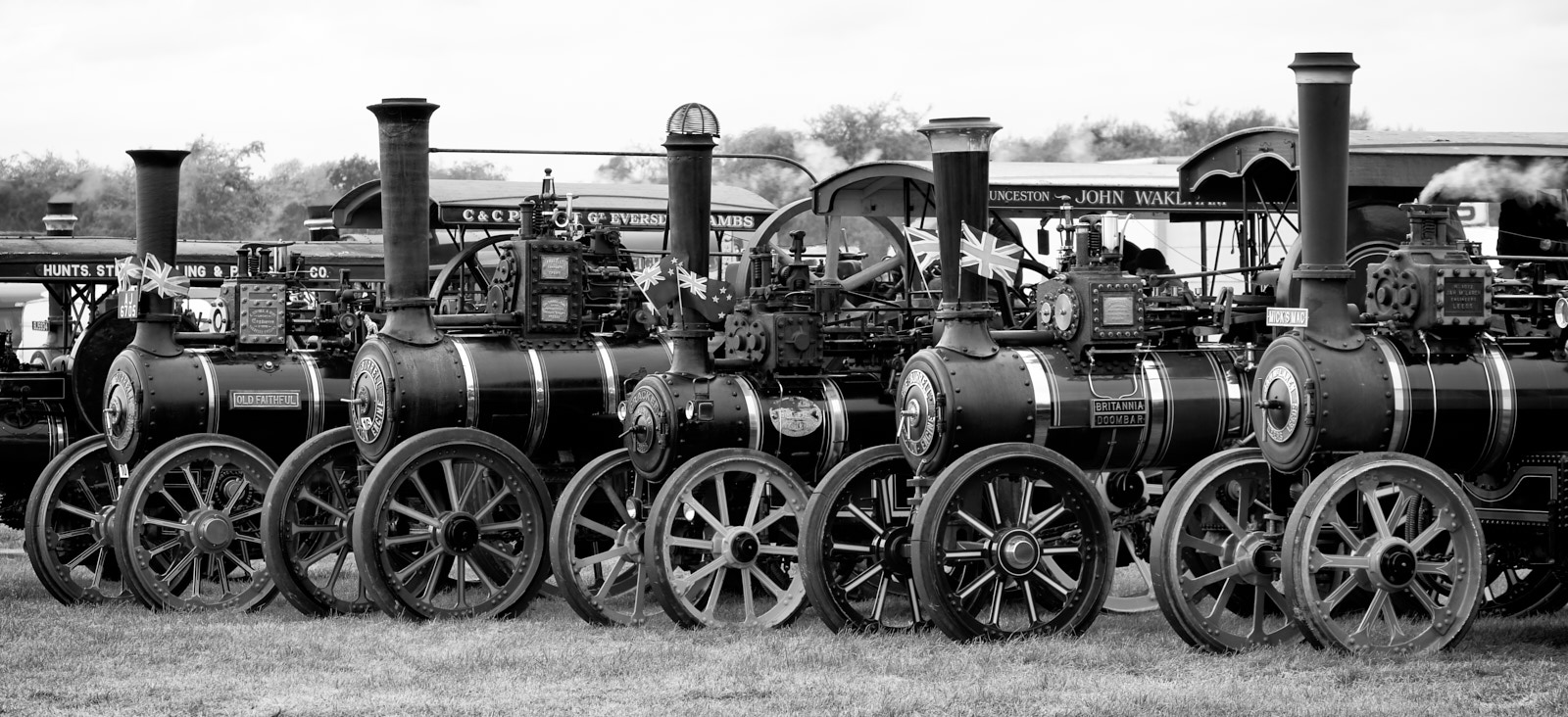
On Saturday, our research group had an outing to Haddenham Steam Rally, which turned out to be a wonderful gathering of a huge range of old equipment, most of it steam-powered, from tractors to cars to pipe organs to merry-go-rounds to fire-engine pumps. It was, of course, a wonderful photo opportunity.
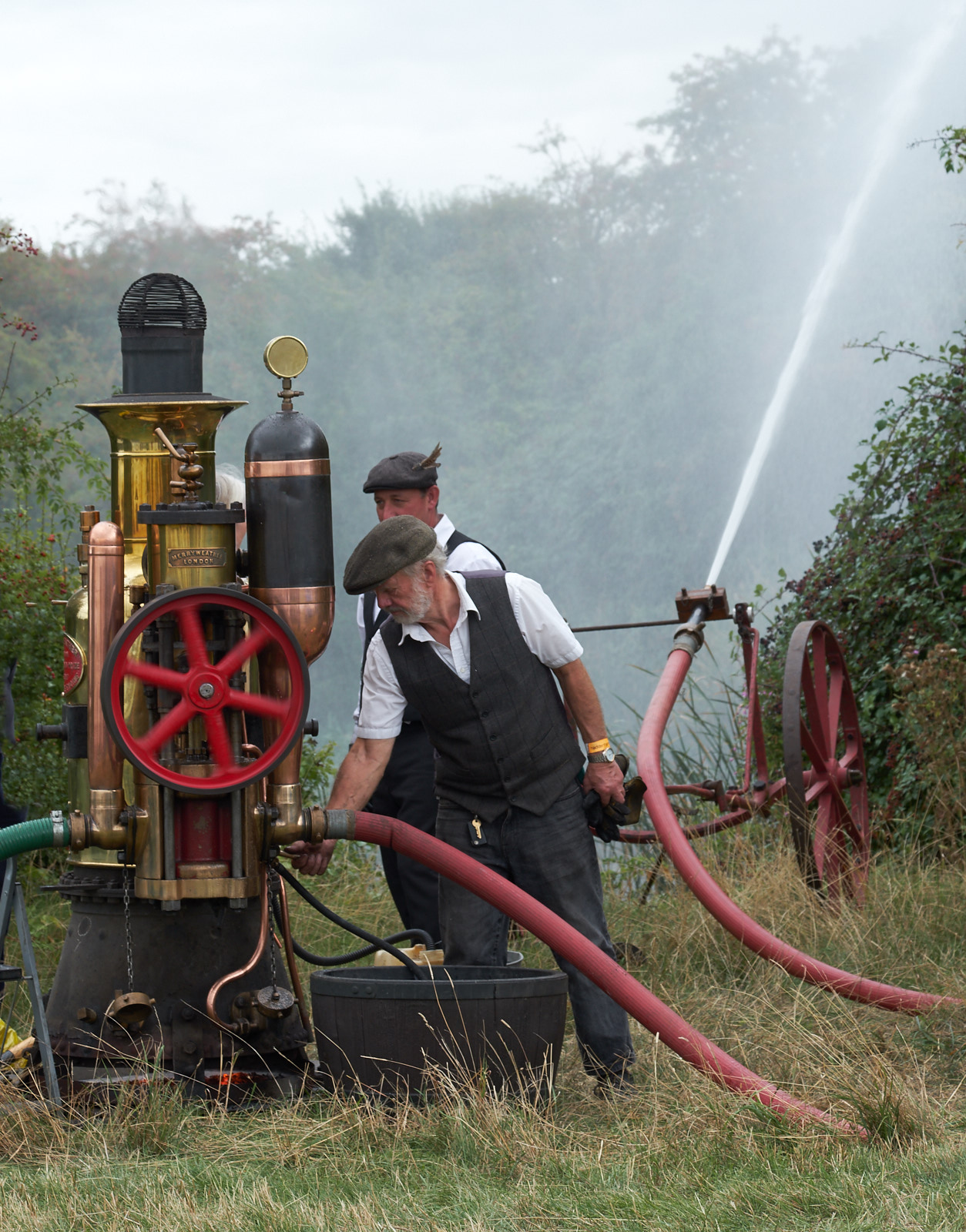
Amongst the mighty machines, there were also many scale models, fully functional, and (to my eyes) just as beautiful.
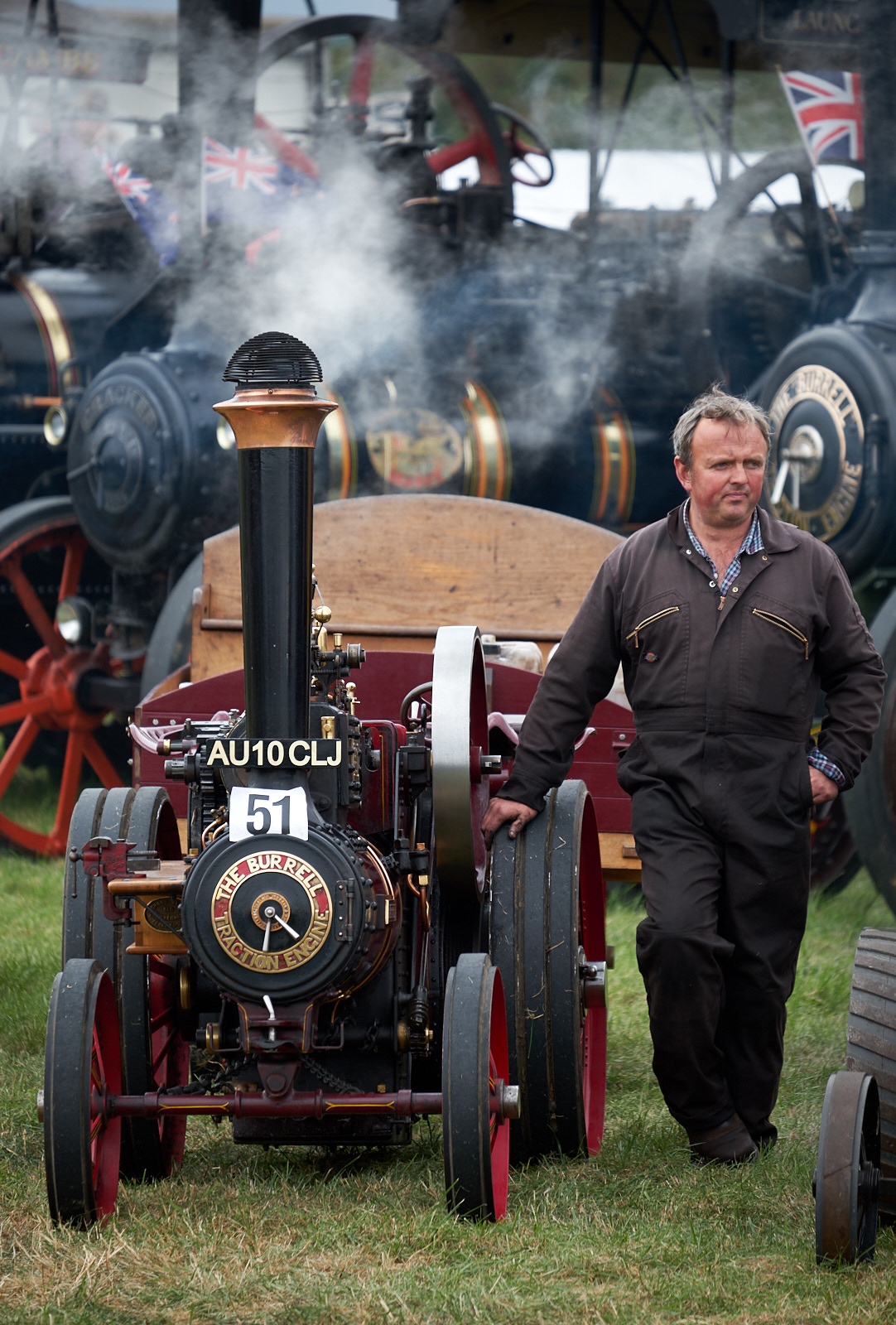
Some of them, I felt, must be feeling under some... ahem... pressure... to perform, under the watchful gaze of their larger colleagues.
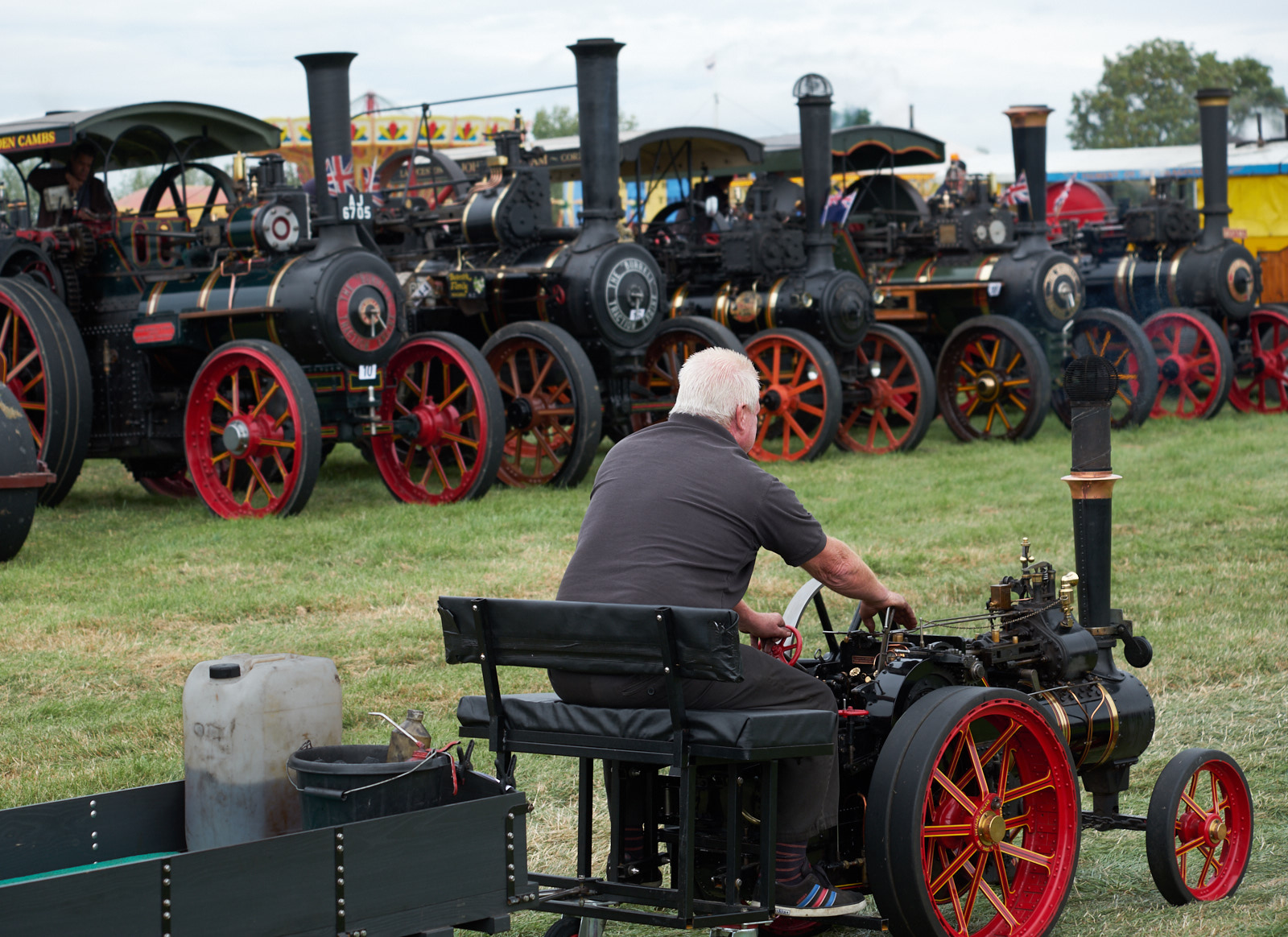
The amount of care that had gone into building and maintaining these was extraordinary.
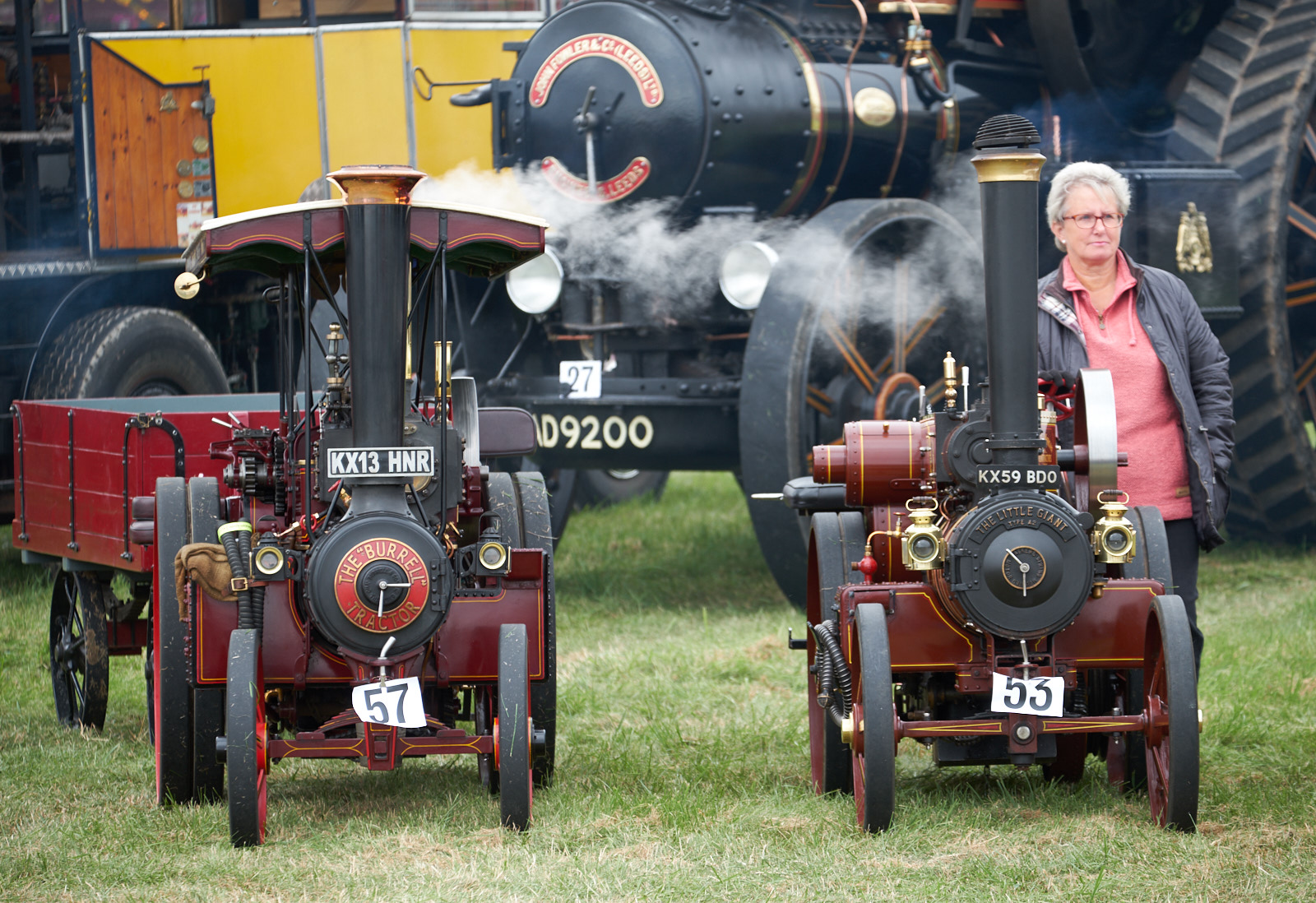
It's only natural that some of them were closely guarded.
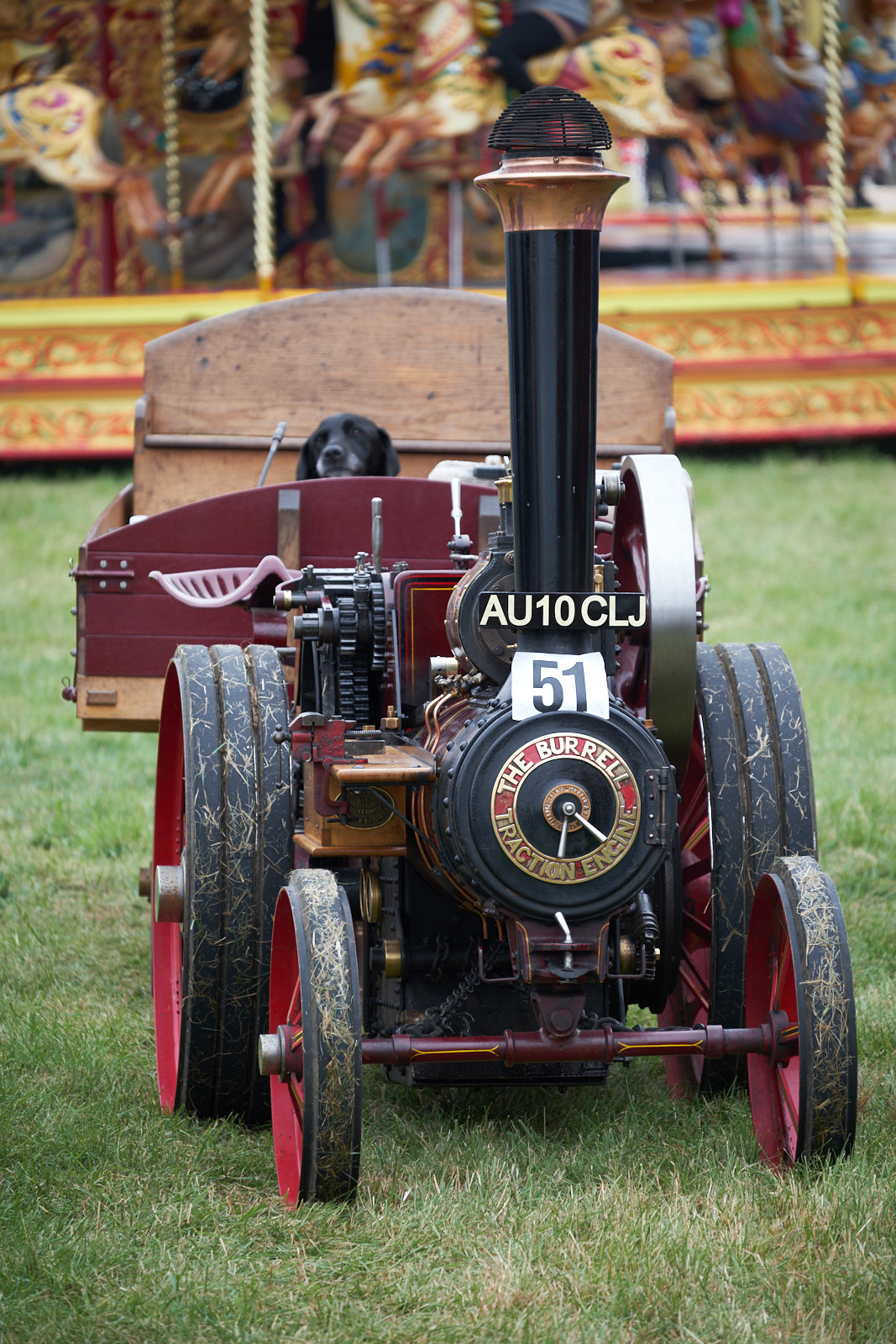
As we walked around the fairground and numerous exhibits, some of these would come puffing by, large or small, at such a pleasingly low speed that one could talk to the drivers and passengers quite easily. And always, everywhere, was the relaxed, almost hypnotic sound of slow, rhythmic puffing.
When they all got together, it was a wonderful sight. I call this photo 'Heated Discussion':
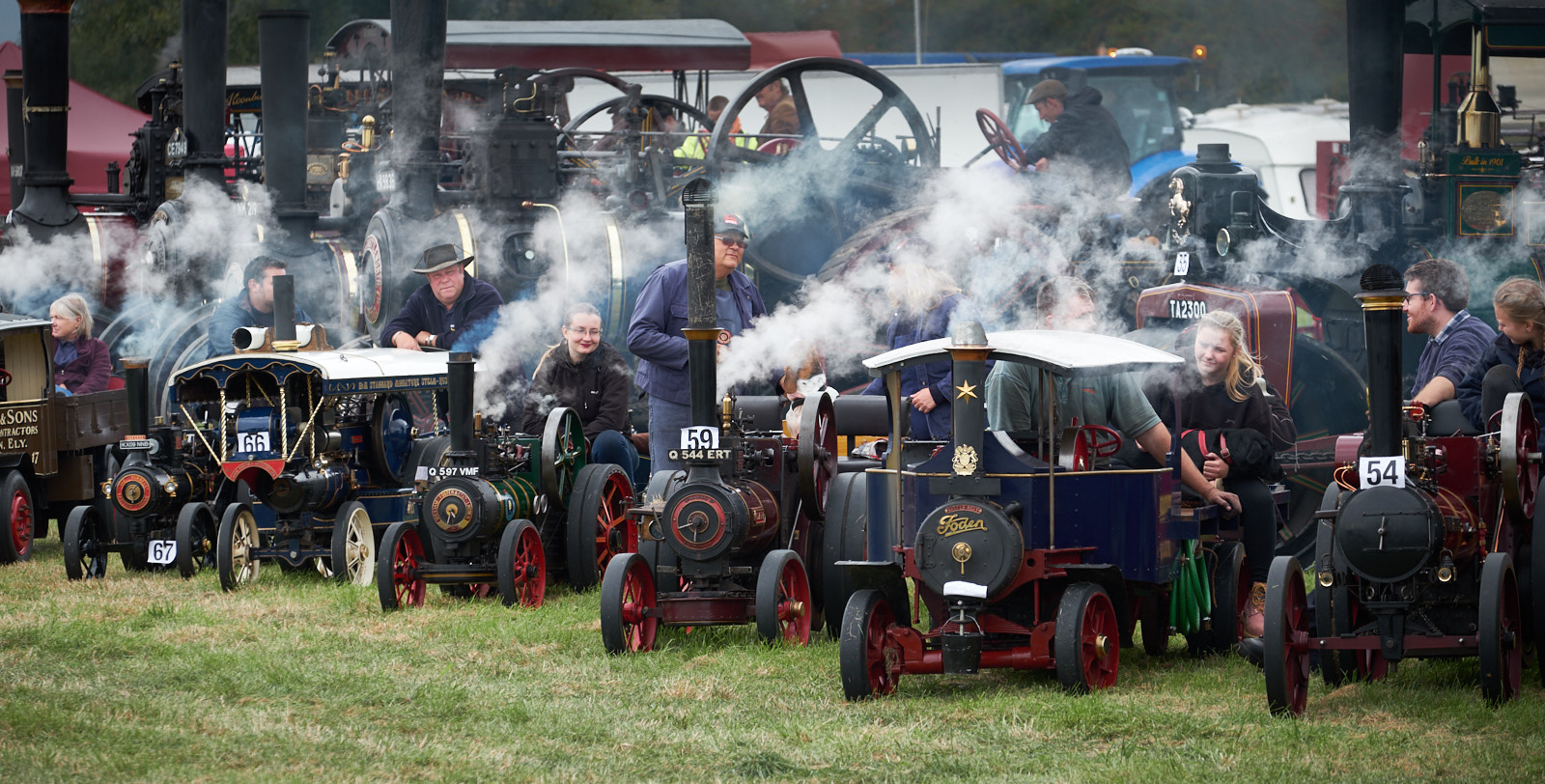
Anyway, a surprisingly enjoyable day. I went along mostly because of the social nature of the trip, but I have a feeling it won't be my last visit.
As someone who has watched a few Star Trek episodes recently... well, OK, I admit it... a few dozen Star Trek episodes recently, I must express my concern about the quality of hardware engineers employed in the construction of Federation starships.
Why is it, that after several generations, they still build ships with computer consoles that explode at the slightest hint of enemy phaser fire? Perhaps Samsung had a watertight long-term supplier contract and the Federation couldn't get out of it, but still, it does seem like a serious design flaw, especially on the bridge.
If you search the web, of course, you'll find that I'm not the only person to have noticed this, indeed, there are many long discussions which might provide an answer if you're a bit more interested than I was. If you're considering a career as a Starfleet officer, however, it might be worth your while doing some more extensive research.
Perhaps the consoles are more robust than they might appear, though. Others have pointed out that a surprising number of them do seem to keep working after having exploded.
So the basic underlying manufacturing is sound. Like so many computer consoles, though, more work is needed to improve the user experience.
This is a lovely idea - the Mixergy hot water tank.
A standard UK hot water tank heats the water from the bottom, either using electricity or water heated by a gas boiler. This means that when you want to heat up your water, you need to heat the whole thing.
Mixergy, instead, put the heating at the top, so you can warm up smaller amounts of water, and then make intelligent use of pumps to circulate it as required if you need to heat larger amounts of water. Not only is this more energy-efficient, but it means you get hot water again more quickly after you've used it up.
There's a more detailed discussion on a recent episode of Fully Charged.