Spiral
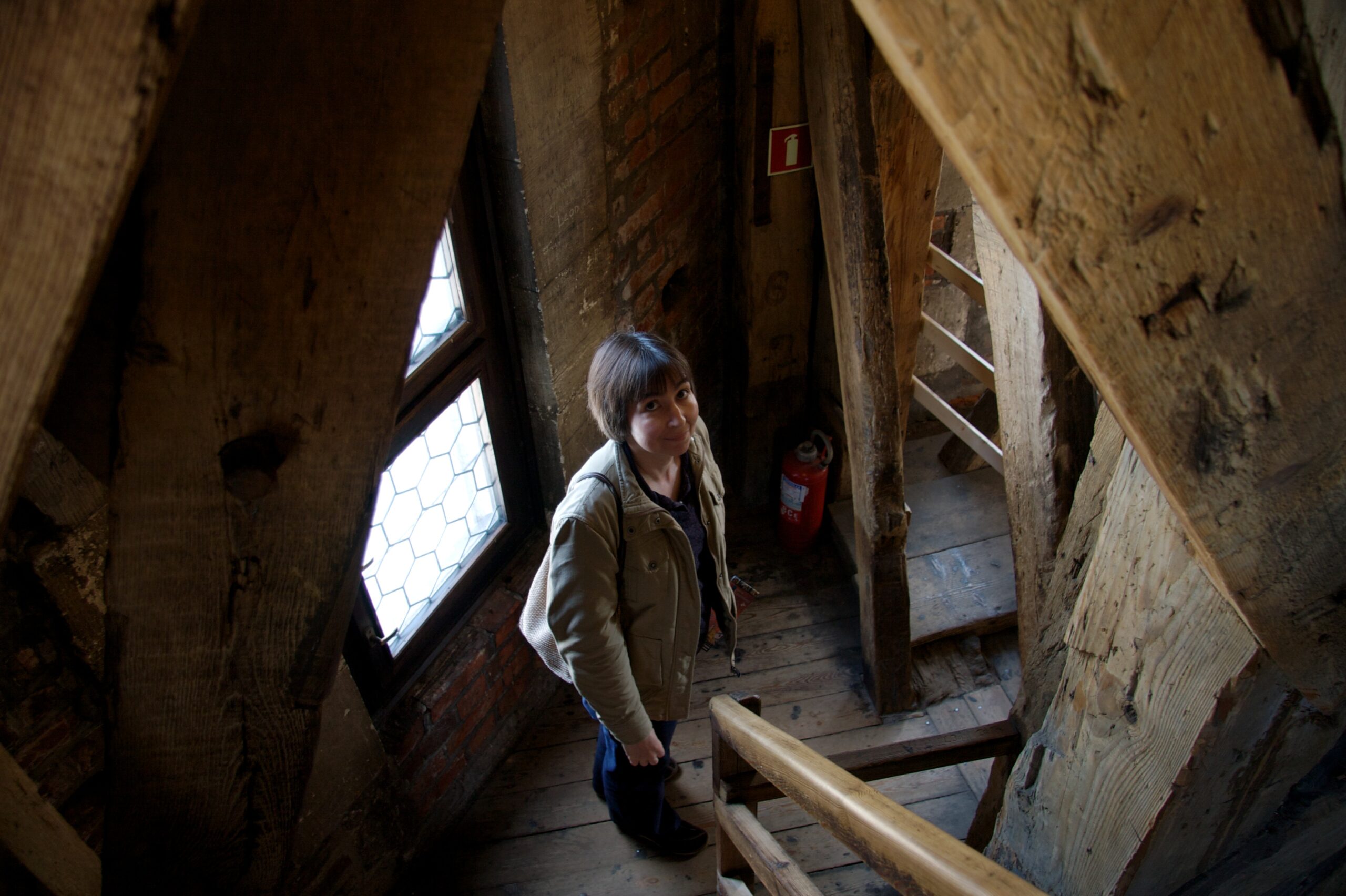
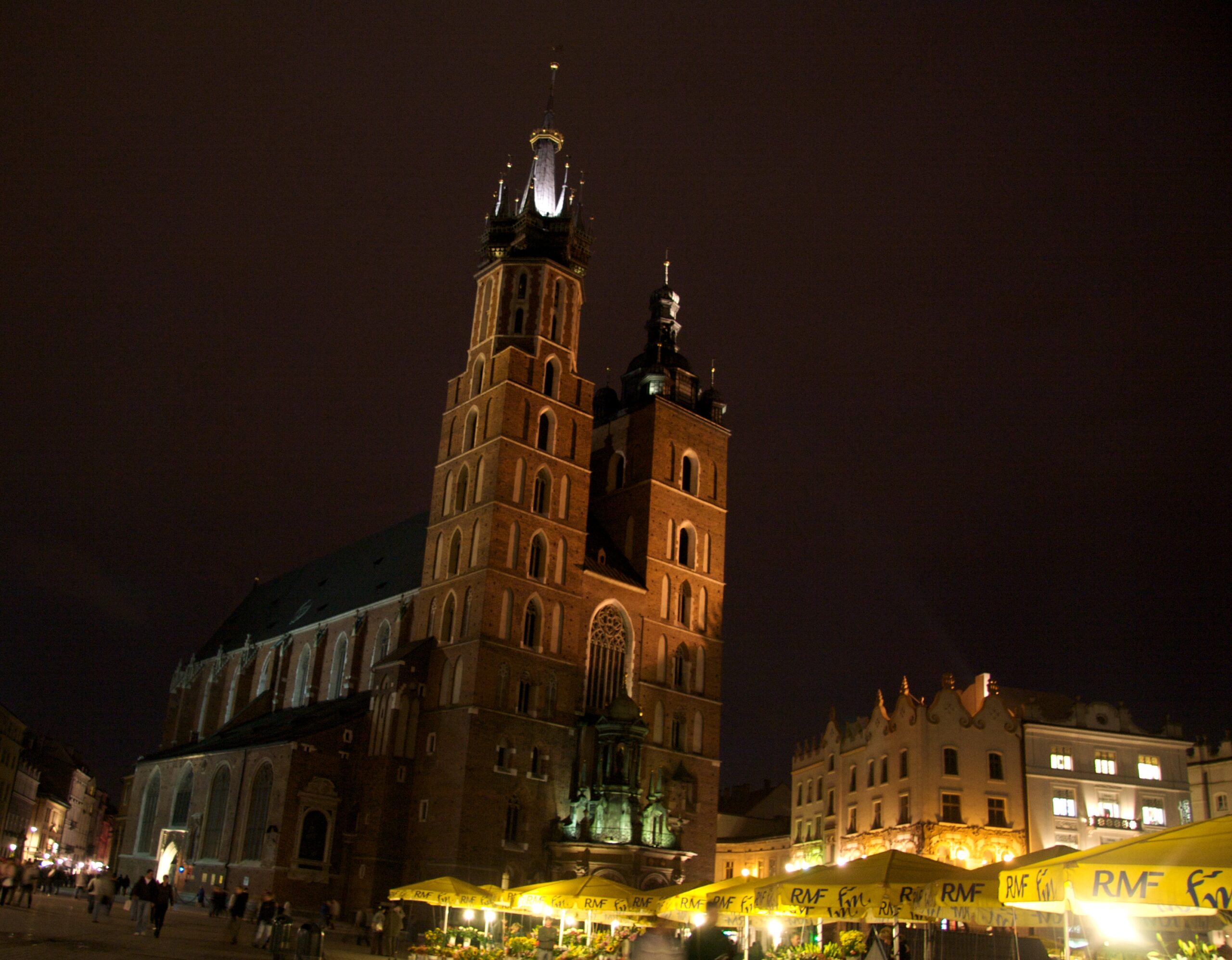
I liked the lack of anything very rectilinear in this one! Rose is in the tower of the church in Krakow market square. This is what is looks like from the outside:
Quentin Stafford-Fraser's blog
One should always have something sensational to read on the net...
I liked the lack of anything very rectilinear in this one! Rose is in the tower of the church in Krakow market square. This is what is looks like from the outside:
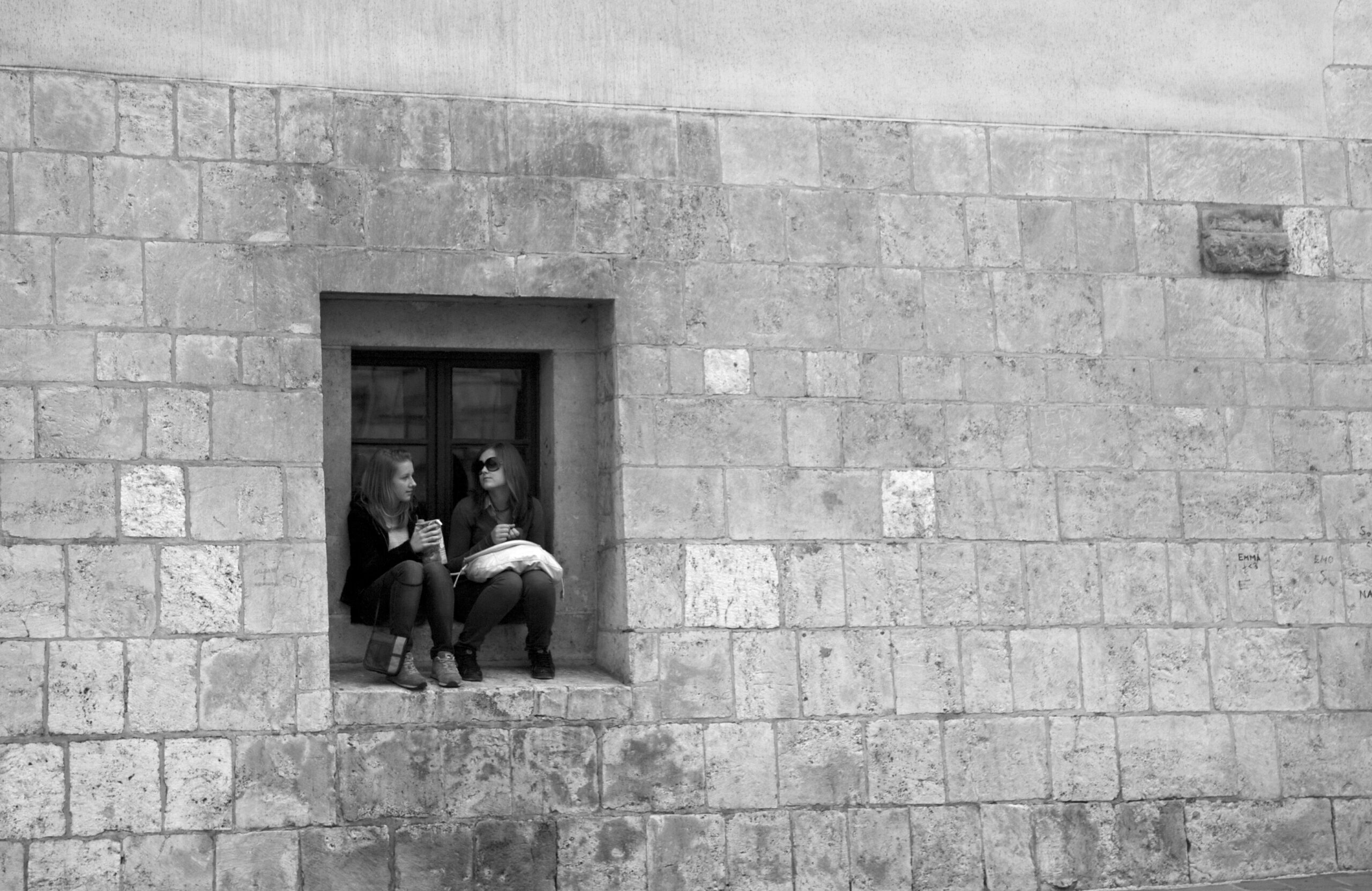
Spotted in Krakow last weekend.
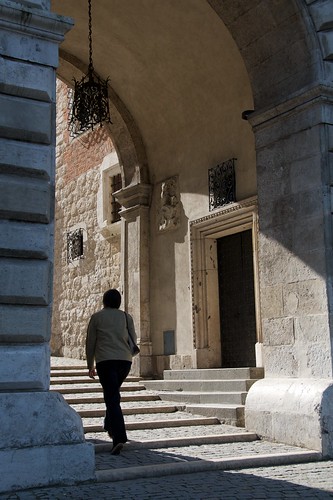
Rose at Krakow castle. I'll post another picture or two over the next couple of days, but you can see more of Krakow here if you're feeling keen.
If you have an existing Linux machine (already running GRUB) and you want to install a fresh version of Ubuntu on it, this page may be handy. All you need to do is download a kernel and an initrd file, reboot and issue a couple of GRUB command lines, and you can install everything else over the network from the Ubuntu repositories.
I've just got a new hosted server which came with 6.06 installed, and I wanted to wipe it and start with a clean 8.04. This was a very quick and easy way to do it, especially since I didn't have easy access to the machine's CD/DVD drive.
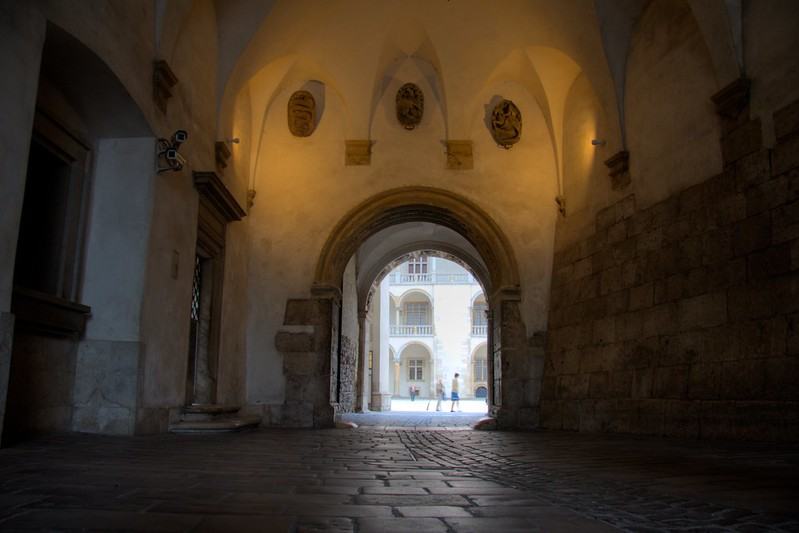
One of my first HDR experiments.
In 2001 at the AT&T Labs in Cambridge, we created a system we called the Broadband Phone:
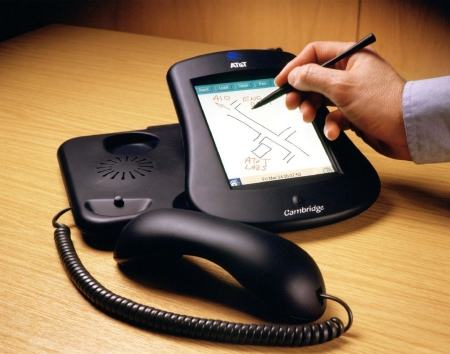
Basically, it was a Linux-based VOIP phone with a VNC viewer and touch screen built in to it, and we built a GUI toolkit which rendered directly over the network in VNC. A standard Dell PC operated as the phone exchange (I wish we'd had Asterisk then!) and also provided the graphics for a variety of specially-written applications. It drove about 100 phones without any trouble, and we used this as our internal phone system in the lab for some time. The plan was to spin out a company based around the technology, but this was 2001, and you couldn't get funding for new companies, whatever you did!
Anyway, at one point I created a cordless version based around a Compaq iPaq. I came across a publicity photo of it recently, and it took me a moment to realise why it looked so familiar:
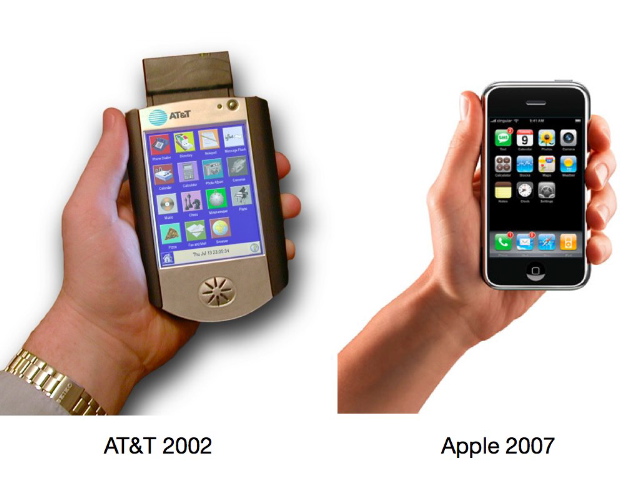
Perhaps we were just too far ahead of the curve... :-)
You can find my original pages about the Broadband Phone project here on the Internet Archive.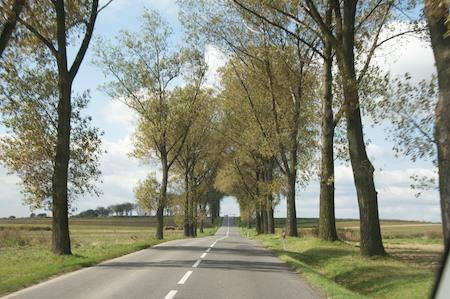
The road from Krakow to Auschwitz

Auschwitz I
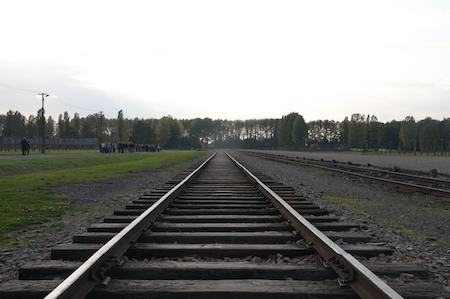
Birkenau disembarkation point
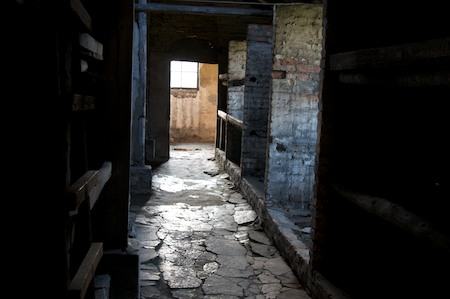
A 'dormitory' at Auschwitz-Birkenau
Slowly but surely, e-paper-based digital book readers are going from strength to strength. I've written before about the Iliad and several times about my Sony PRS.
iRex have now released their Digital Reader series - 'the largest, yet thinnest e-reader ever' - with a 10.2-inch display, and 1024x1280 resolution.

Starting at £469, though - that's quite a lot of paperbacks...
Update: Plastic Logic have been showing off the prototype of their new reader at DEMO, as well. Thanks to Stephen De Gabrielle for the links.Don't you just love local newspapers? A constant source of amusement, I find. Take, for example, the following introductory paragraphs from an article in the Cambridge Crier under the above title:
I think this is brilliant in so many ways. Hosepipe bans and people taking time off work? Food poisoning, high winds and subsidence. (Hopefully not connected too directly). No wonder the council's document needs to include 92 measures. The area at risk of severe flooding is expected to increase by some completely unspecified amount over the next 47 years. And the paragraph breaks make it rather unclear just how many of these disasters are the direct result of the document... It reminds me of that great scene in Ghostbusters: Dr. Peter Venkman: This city is headed for a disaster of biblical proportions. Mayor: What do you mean, "biblical"? Dr Ray Stantz: What he means is Old Testament, Mr. Mayor, real wrath of God type stuff. Dr. Peter Venkman: Exactly. Dr Ray Stantz: Fire and brimstone coming down from the skies! Rivers and seas boiling! Dr. Egon Spengler: Forty years of darkness! Earthquakes, volcanoes... Winston Zeddemore: The dead rising from the grave! Dr. Peter Venkman: Human sacrifice, dogs and cats living together... mass hysteria! Anyway, fortunately, the city council has adopted this plan. That's good. So I'll be less likely to suffer food poisoning in 2055 but, sadly, may not be taking so much time off work. Maybe by then I'll have moved away from the high winds of disease-ridden Cambridge to avoid a stroke. I must go and read The Shipping News again...Plans to fight climate change and cut the carbon footprint of Cambridge by 89 per cent have been announced.
City councillors say it is time for action and have set out 92 ways to tackle climate change and reduce the risk of increased flooding, water shortages, higher temperatures, high winds and subsidence. The area of severe flood risk in the city from the river Cam is predicted to increase by 2055.
More people could suffer strokes, disease and food poisoning, and there could be more hosepipe bans, more people taking time off work, more damage to crops and harm to the environment.
...
If you've upgraded to iTunes 8, but not actually watched Steve Jobs' keynote or listened to lots of Mac podcasts, it may be easy to miss the best bit of the 'Genius' feature. The obvious bit - the Genius sidebar, shows you all the music you can buy at the iTunes store that might coincide with your tastes.
 The more subtle bit is the Genius Playlist, which appears with your other playlists on the left hand side. If you select a song in your collection and then click the little 'genius' button at the bottom right, this playlist will populated with that song and a selection of your music that should go with it.
On my brief experiments, it seems rather good. The things you can do when you can draw on millions of users' data...